










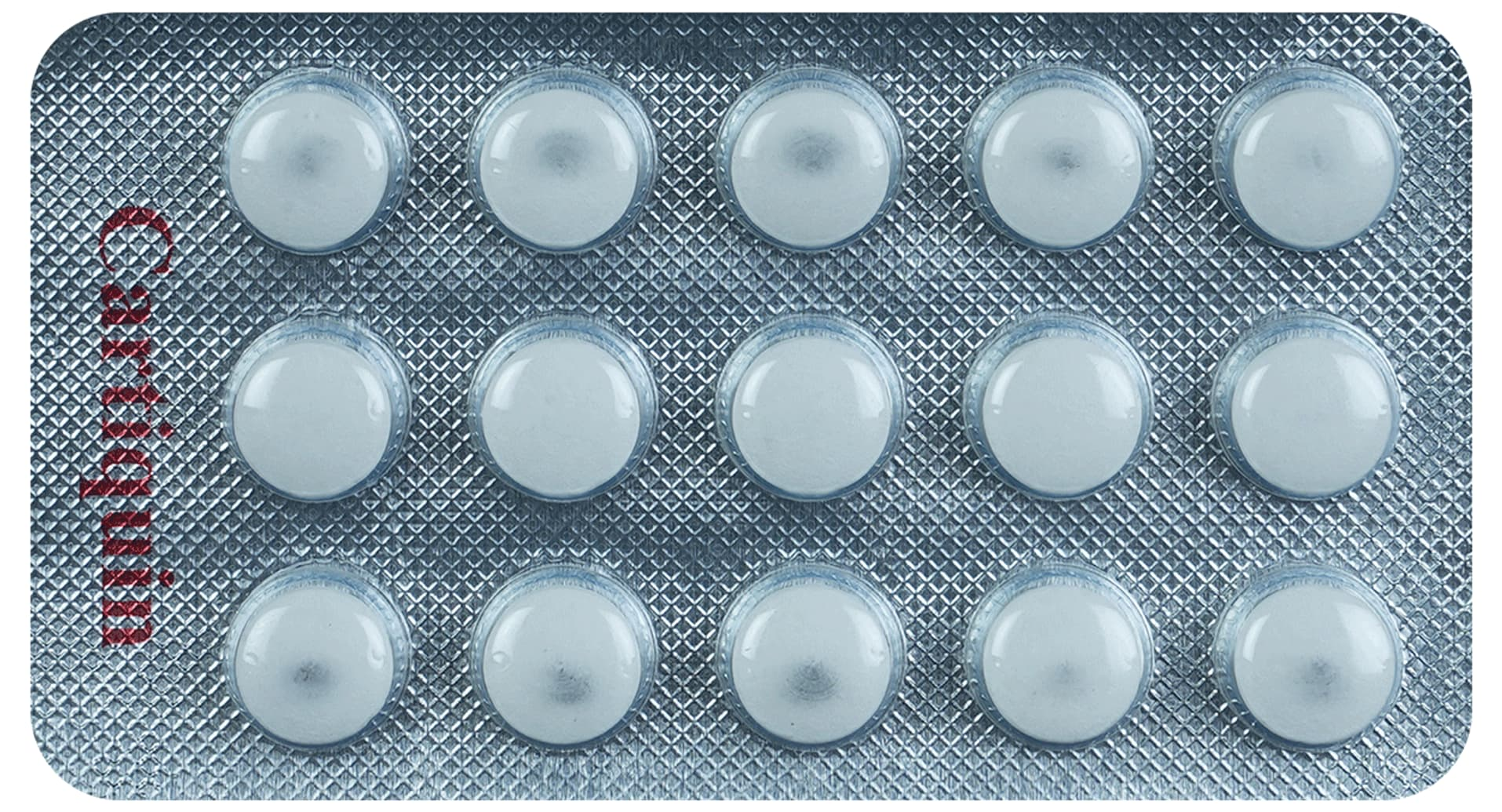

Cartiquin 200 mg Tablet – Hydroxychloroquine Sulphate, Blister of 15
Cartiquin 200 mg from Overseas Health Care is Hydroxychloroquine Sulphate 200 mg in a blister of 15 tablets – an unusual count in a market that runs almost entirely on strips of ten. Fifteen happens to suit hydroxychloroquine’s alternating regimens rather well. Because the drug comes in one strength and is dosed by weight, prescriptions frequently work out to an average of one and a half tablets a day – taken as 200 mg one day and 400 mg the next – so that a patient of around 60 kg stays under the 5 mg/kg ceiling that protects the retina. Fifteen tablets is exactly ten days of that pattern. In malaria the same tablet is used quite differently, as a short weight-based course or a weekly prophylactic dose. Blister of 15 tablets.
Key Features
- Hydroxychloroquine Sulphate 200 mg tablets
- Blister of 15 – ten days of an alternating 200 mg / 400 mg regimen
- Suits the weight-based dosing that keeps intake under 5 mg/kg per day
- Used in rheumatoid arthritis, lupus and malaria
- From Overseas Health Care Pvt Ltd.
Composition
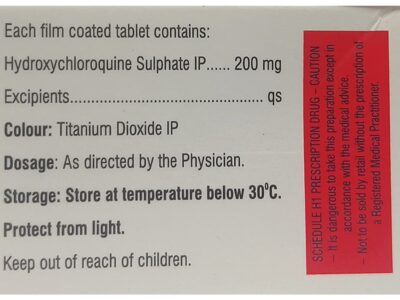
- Hydroxychloroquine Sulphate – 200 mg
- Film-coated tablet. As printed on the pack
Uses & Benefits
- Used long term in rheumatoid arthritis to reduce joint pain, swelling and stiffness
- A cornerstone treatment in systemic and discoid lupus erythematosus
- Reduces the frequency of lupus flares and helps its skin and joint symptoms
- Also used in the treatment and prevention of malaria, as prescribed
- One of the better-tolerated disease-modifying drugs, needing no routine blood monitoring
- Taken once or twice daily as a tablet, alongside other treatment where needed
Directions for Use
- Swallow the tablet whole with a meal or a glass of milk – taking it on an empty stomach is the main cause of the nausea
- Take it exactly as your doctor prescribes. The dose is set from your body weight, not a standard number
- Take it at the same time each day. If you miss a dose, take it when you remember unless the next is nearly due – never double up
- Allow weeks to months for the full effect in rheumatoid arthritis or lupus, and keep taking it in the meantime
- Keep your eye-screening appointments for as long as you are on it, and do not take antacids within four hours of a dose
Precautions
- Hydroxychloroquine can damage the retina, and the damage is not reversible. Risk rises above 5 mg per kg of actual body weight per day, beyond five years of use, with kidney impairment and with tamoxifen. A baseline eye examination and regular screening thereafter are part of the treatment
- Report any change in vision immediately – blurring, difficulty reading, missing patches, altered colour vision or light sensitivity
- Tell your doctor if you have G6PD deficiency, porphyria, psoriasis, epilepsy, liver or kidney disease, or any heart rhythm problem. It can prolong the QT interval and can trigger a severe psoriasis flare
- It can cause low blood sugar, sometimes severe, even in people who are not diabetic. If you take diabetes medicines, your doses may need reducing
- Do not stop it on your own – in lupus and rheumatoid arthritis, stopping often brings on a flare. It also takes weeks to months to work
- Keep it well away from children. A small number of tablets can be fatal to a small child. Nausea, stomach upset, diarrhoea, headache and rash are the usual early effects and are much reduced by taking it with food
Storage
- Store below 30°C in a dry place, protected from light
- Keep the tablets in the blister until use
- Keep out of reach of children
Disclaimer
Schedule H prescription drug – to be sold by retail on the prescription of a Registered Medical Practitioner only. Hydroxychloroquine requires baseline and periodic eye examinations and long-term medical supervision. This information is for general awareness and is not a substitute for professional medical advice, diagnosis or treatment.




Reviews
There are no reviews yet.