










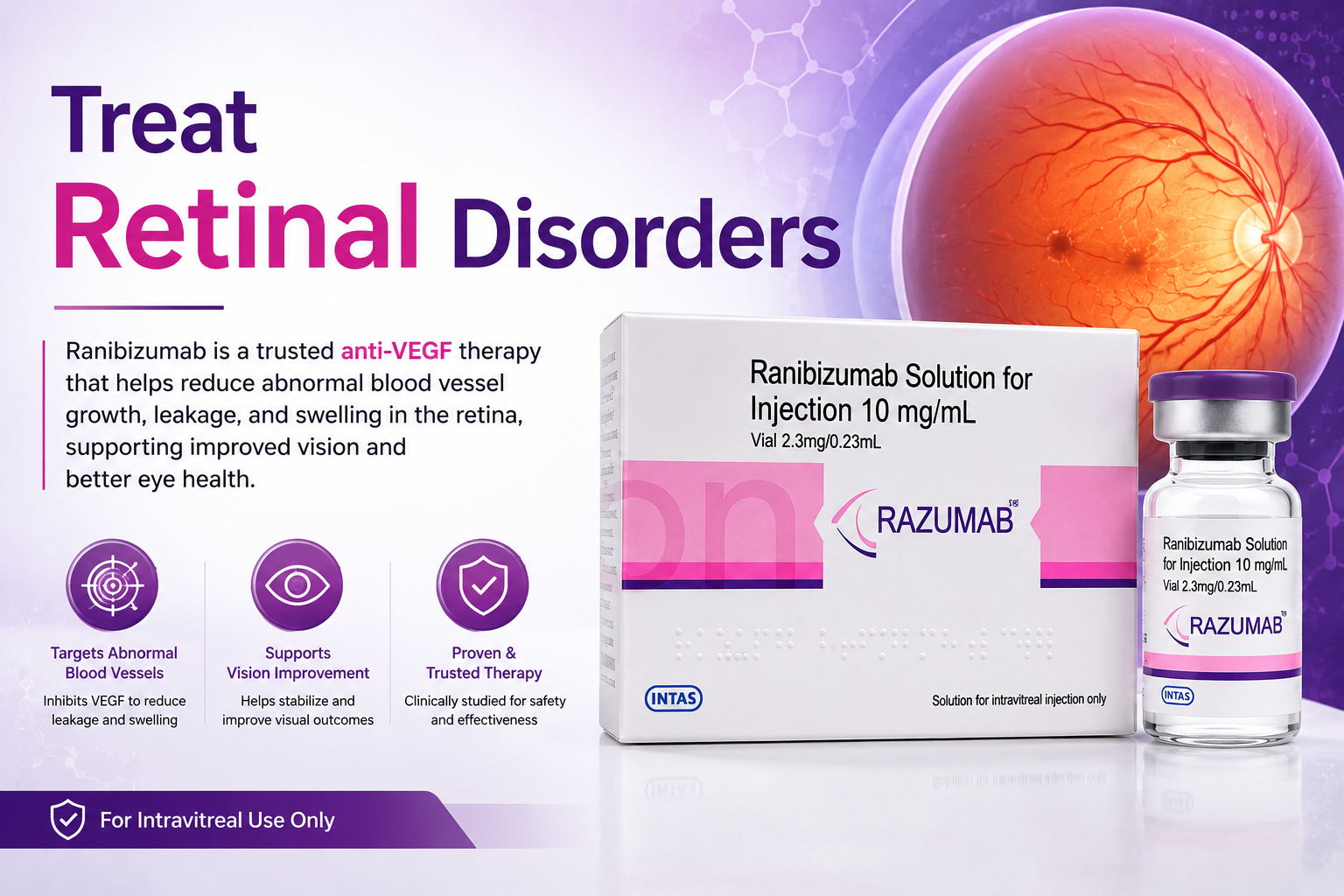
How Ranibizumab Helps Treat Retinal Disorders
Vision changes caused by retinal disease can be frightening, especially when they progress quickly. Over the last two decades, a class of medicines called anti-VEGF injections has transformed how doctors treat several serious retinal conditions, and Ranibizumab is one of the most established and widely used medicines in this category. This article explains how Ranibizumab works, which conditions it treats, what the treatment process involves, and what to know about safety and expectations.
What Is Ranibizumab?
Ranibizumab is a prescription medicine given as an injection directly into the eye to treat a group of retinal disorders that involve abnormal blood vessel growth or fluid leakage at the back of the eye. It belongs to a class of drugs known as anti-VEGF (anti-vascular endothelial growth factor) agents, and it is available under brand and generic formulations such as Ranibizumab 2.3 mg Injection and Accentrix Solution for Injection.
It is administered only by an ophthalmologist in a clinical setting and is not a medicine that is self-administered at home.
How Ranibizumab Works
To understand how Ranibizumab helps, it’s useful to understand the underlying problem it addresses. In several retinal diseases, the eye produces excess amounts of a protein called vascular endothelial growth factor (VEGF). This protein encourages the growth of new, fragile blood vessels and increases leakage of fluid from existing vessels in the retina — the light-sensitive layer at the back of the eye.
This abnormal vessel growth and leakage can cause swelling, bleeding, and scarring, all of which distort or damage central vision over time.
Ranibizumab works by binding to VEGF and blocking its activity. This:
- Slows or stops the growth of abnormal blood vessels
- Reduces fluid leakage and swelling in the retina
- Helps stabilise and, in many cases, improve vision
- Reduces the risk of further vision loss from continued disease progression
Because VEGF activity returns over time, Ranibizumab is not a one-time treatment — it requires repeated injections on a schedule determined by an ophthalmologist based on how the eye responds.
Retinal Conditions Ranibizumab Is Used For
Age-Related Macular Degeneration (AMD)
Ranibizumab is widely used to treat the “wet” (neovascular) form of age-related macular degeneration, a leading cause of vision loss in older adults. In wet AMD, abnormal blood vessels grow under the macula, the part of the retina responsible for sharp, central vision, causing rapid and often severe vision changes if untreated.
Diabetic Macular Edema (DME)
People with diabetes can develop swelling in the macula due to leaking blood vessels, a condition called diabetic macular edema. Ranibizumab helps reduce this swelling and is a standard treatment option alongside blood sugar management.
Diabetic Retinopathy
Ranibizumab is also used to treat diabetic retinopathy, a broader condition where high blood sugar damages retinal blood vessels over time, which can lead to abnormal vessel growth and bleeding inside the eye.
Retinal Vein Occlusion (RVO)
When a vein carrying blood away from the retina becomes blocked, it can cause sudden swelling and vision loss. Ranibizumab is used to manage the swelling associated with both branch and central retinal vein occlusion.
Myopic Choroidal Neovascularization
In some people with severe short-sightedness, abnormal blood vessels can grow in the retina, a condition called myopic choroidal neovascularization, which Ranibizumab can also help treat.
What to Expect During Treatment
Before each injection, the eye is numbed with local anaesthetic and cleaned with an antiseptic solution to reduce the risk of infection. The injection itself is quick, typically taking only a few minutes, though some mild discomfort, pressure, or a gritty sensation afterward is common.
Most people require injections roughly once a month initially, especially in the first few months of treatment, with the doctor adjusting the frequency over time based on how the retina responds, sometimes moving to a less frequent, individualised schedule. Regular monitoring, often including retinal imaging such as optical coherence tomography (OCT), helps guide these decisions.
Consistency with the treatment schedule matters significantly — skipping or delaying injections can allow the underlying disease to progress and reduce the overall benefit of treatment.
Common Side Effects and Safety Considerations
Like any medical procedure, Ranibizumab injections carry some risks, most of which are mild and temporary:
- Eye redness, irritation, or a feeling of something in the eye
- Increased pressure in the eye immediately after injection
- Small bleeding spots on the white of the eye
- Blurred vision for a short period after the injection
- Floaters (small spots or specks in vision)
Less commonly, more serious complications can occur, including eye infection (endophthalmitis), retinal detachment, or a significant rise in eye pressure, which is why injections are performed under sterile conditions and why patients are advised to report any sudden increase in pain, redness, or vision changes immediately after treatment.
There is also a small, recognised risk of systemic side effects related to anti-VEGF medicines, including a slightly increased risk of blood clot–related events such as stroke, since a small amount of the medicine can enter the bloodstream. Your ophthalmologist will consider your overall health history, including any history of stroke or cardiovascular disease, before starting treatment.
Why Ranibizumab Should Only Be Used Under Specialist Care
Ranibizumab is not a medicine that can be safely self-prescribed or self-administered. Appropriate use depends on:
- An accurate diagnosis confirmed through retinal examination and imaging
- Correct, sterile administration technique to minimise infection risk
- Ongoing monitoring to track treatment response and adjust the injection schedule
- Assessment of individual risk factors, including cardiovascular history
Only a qualified ophthalmologist can determine whether Ranibizumab is appropriate for a specific retinal condition and manage the ongoing treatment safely.
Frequently Asked Questions
1. Does Ranibizumab cure retinal disease?
No. Ranibizumab manages the disease process by controlling abnormal blood vessel growth and leakage, but it does not cure the underlying condition. Most people need repeated injections over months or years to maintain results.
2. Is the injection painful?
The eye is numbed beforehand, so most people feel only mild pressure or a brief stinging sensation rather than significant pain. Some soreness or grittiness afterward is common and usually settles within a day.
3. How soon will I notice a difference in my vision?
Some people notice improvement within the first few weeks, though results vary depending on the condition being treated, how advanced it is, and individual response. Your ophthalmologist will track progress with regular check-ups and imaging.
4. What happens if I miss a scheduled injection?
Missing or delaying injections can allow fluid buildup and abnormal vessel growth to resume, which may lead to a decline in vision. It’s important to follow the schedule your ophthalmologist recommends as closely as possible.
5. Can both eyes be treated at the same time?
Yes, if both eyes are affected, but this is decided by your ophthalmologist based on your specific situation and typically involves separate, carefully managed injections.
6. Are there alternatives to Ranibizumab?
Yes, other anti-VEGF medicines are also used to treat similar retinal conditions. Your ophthalmologist will recommend the option best suited to your specific diagnosis, other health conditions, and treatment response.
7. Is Ranibizumab safe for people with heart or stroke history?
It requires careful evaluation. Because there is a small associated risk of blood clot–related events, your ophthalmologist will review your full medical history before recommending treatment.
Conclusion
Ranibizumab has become a cornerstone treatment for several serious retinal conditions, including wet AMD, diabetic macular edema, diabetic retinopathy, and retinal vein occlusion, by directly targeting the abnormal blood vessel growth and leakage that drives vision loss in these diseases. It is not a cure, and it works best as part of an ongoing, carefully monitored treatment plan under the care of an ophthalmologist. Staying consistent with the recommended injection schedule and follow-up appointments is one of the most important factors in preserving vision over the long term.
Medical Disclaimer
This article is intended for general educational and informational purposes only. It is not medical advice, and it is not a substitute for consultation, diagnosis or treatment by a qualified healthcare professional.
Ranibizumab is a prescription medicine that must be administered by a qualified ophthalmologist under sterile clinical conditions. It does not cure retinal disease and carries potential risks and side effects that vary by individual.
If you experience sudden vision changes, eye pain, redness, or unusual symptoms after treatment, seek medical attention promptly.
PMC Herbals does not dispense prescription medicines without a valid prescription and does not accept liability for decisions made solely on the basis of this content.