










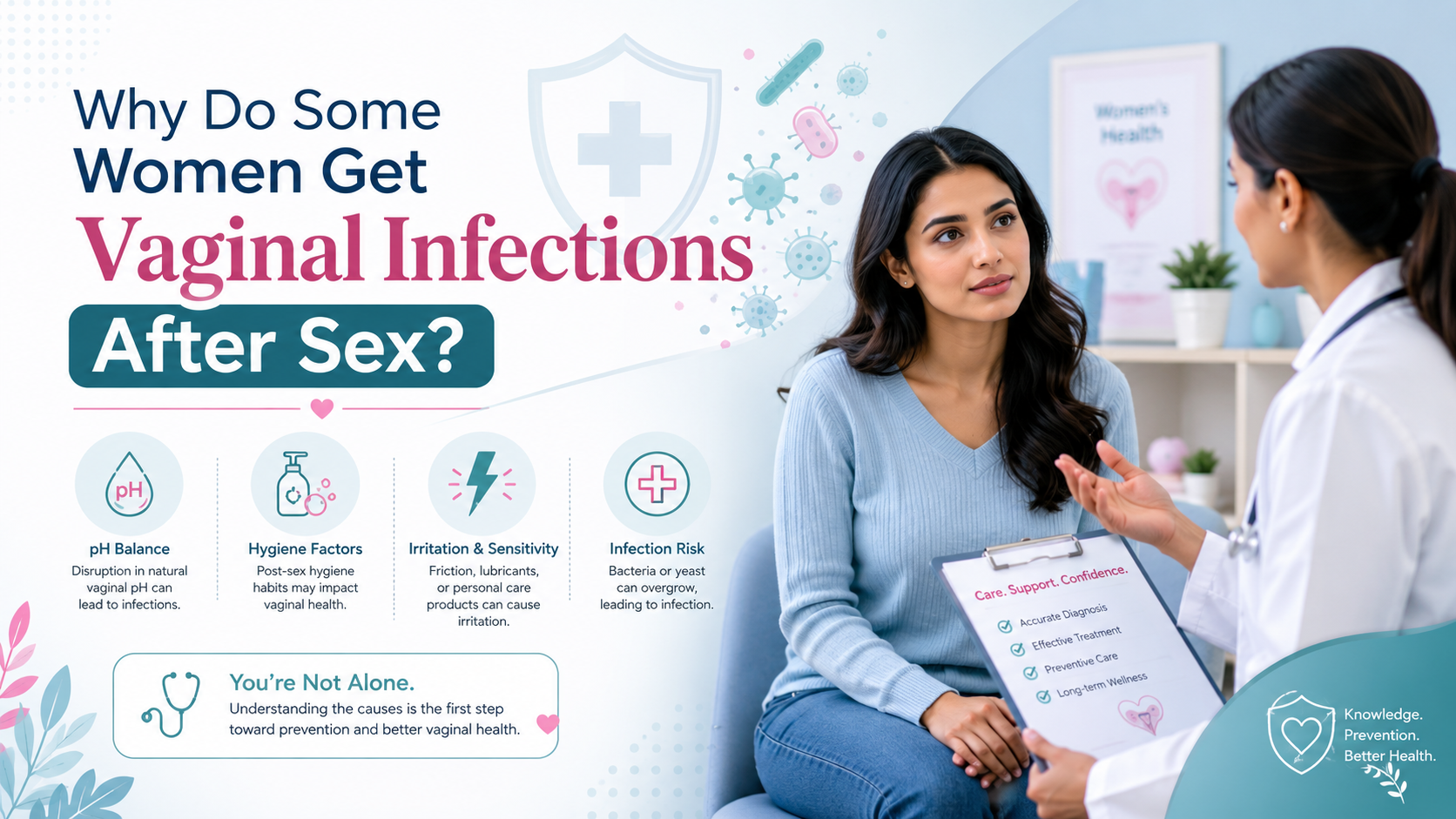
If you notice itching, unusual discharge or discomfort every time after sex, you are far from alone, and it is not something to feel embarrassed about. Vaginal infections that show up after sexual activity are one of the most common reasons women visit a gynaecologist, and in most cases there is a clear, fixable explanation behind them.
The confusing part is that “infection after sex” can actually mean several different things — a yeast infection, bacterial vaginosis, a urinary tract infection, or occasionally a sexually transmitted infection — and each one needs a different approach. This guide walks through why these infections happen, how to tell them apart, and what genuinely helps.
- Why Does This Happen After Sex?
- The Most Common Culprits
- Yeast Infections After Sex
- Bacterial Vaginosis After Sex
- UTIs Linked to Sexual Activity
- How to Tell These Apart
- Risk Factors That Make It More Likely
- How Sex Disrupts Vaginal pH and Bacteria
- Prevention Tips That Actually Help
- Treatment Options
- When to See a Doctor
- Frequently Asked Questions
- Conclusion
- Medical Disclaimer
Why Does This Happen After Sex?
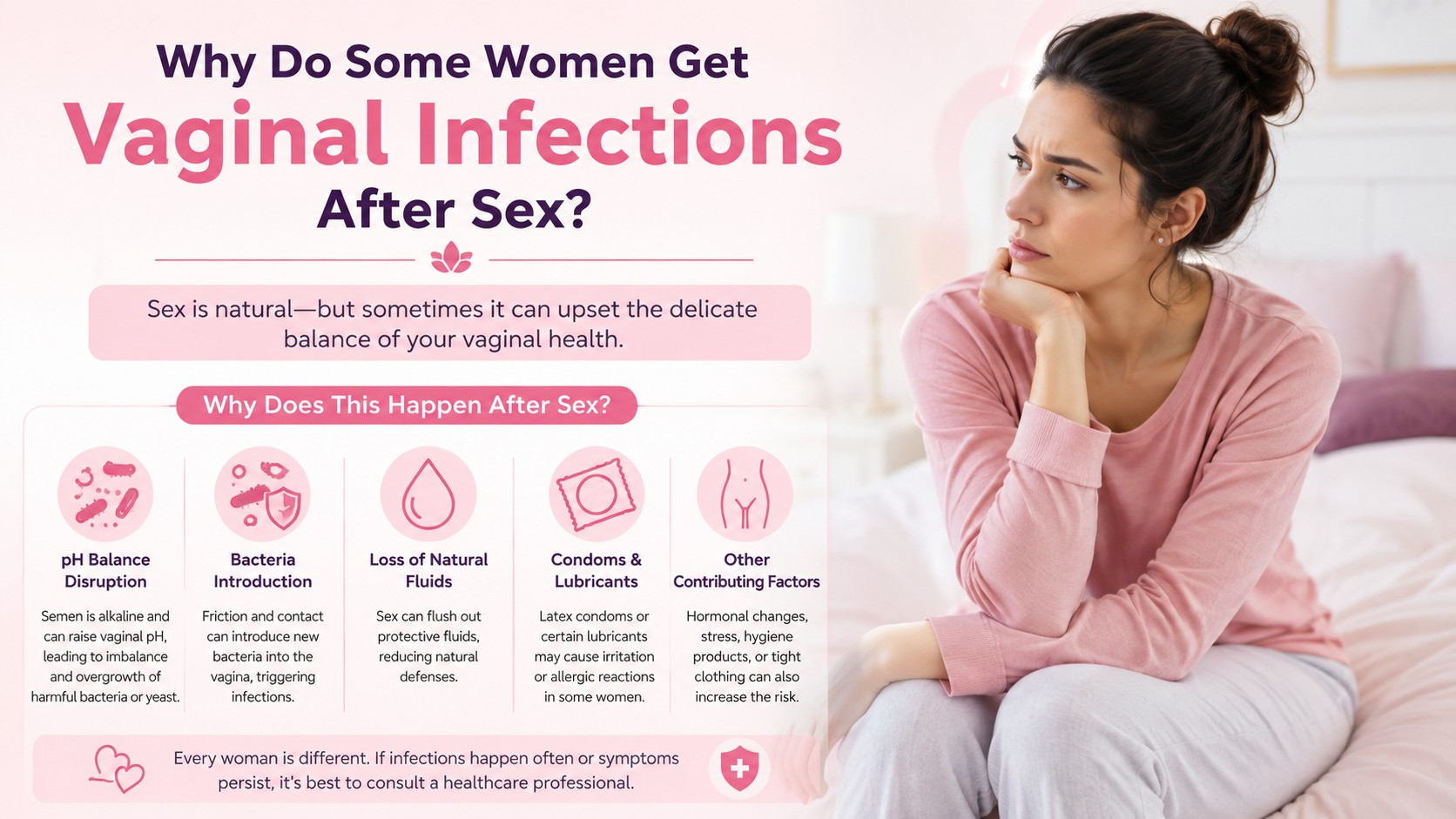
A healthy vagina maintains its own balanced ecosystem of bacteria, mostly Lactobacillus species, which keep the environment mildly acidic and unfriendly to harmful microbes. Sexual activity can disturb that balance in several ways at once: semen is naturally alkaline and can temporarily raise vaginal pH, friction can cause tiny changes to the vaginal lining, and intercourse can physically introduce new bacteria — from a partner’s skin, from the anus, or simply from the mechanical act itself — into an environment where they normally would not be.
None of this means sex is “unclean” or that something is wrong with you. It is a predictable side effect of how the vaginal ecosystem works, and it explains why infections cluster around sexual activity so consistently.
The Most Common Culprits
Three conditions account for the overwhelming majority of post-sex infections:
- Yeast infections (candidiasis) — an overgrowth of the fungus Candida, which is normally present in small amounts
- Bacterial vaginosis (BV) — an imbalance where less helpful bacteria outnumber the protective Lactobacillus species
- Urinary tract infections (UTIs) — bacteria, often from the bowel, entering the urethra during sex
Less commonly, symptoms after sex can also point to a sexually transmitted infection, which is why persistent or unusual symptoms deserve a proper test rather than a guess.
Yeast Infections After Sex
Yeast infections cause intense itching, thick white discharge often described as looking like cottage cheese, and soreness or redness around the vulva. Sex itself does not directly cause a yeast infection, but the friction and moisture involved can aggravate an infection that was already starting, and a rise in vaginal pH after ejaculation can occasionally tip the balance in favour of yeast overgrowth.
Standard treatment includes antifungal options such as ZOCon 50 DT Tablet (fluconazole), taken orally, or Candid-CL Vaginal Suppositories (clotrimazole), inserted directly. Both are effective, and the right choice depends on how often infections recur and personal preference — your doctor or pharmacist can advise which suits you.
Bacterial Vaginosis After Sex
BV is the most common vaginal condition in women of reproductive age, and it is strongly linked to sexual activity, particularly with new or multiple partners, though it is not classified as an STI. It causes a thin, greyish-white discharge with a distinct fishy odour, especially noticeable after sex, along with mild irritation. Unlike yeast infections, BV typically does not cause much itching.
BV happens when protective Lactobacillus bacteria are outnumbered by other bacteria, and semen’s alkaline pH is one of several factors that can tip this balance. It requires a prescription antibiotic, usually metronidazole or clindamycin in oral or vaginal form, and does not resolve on its own or with antifungal treatments meant for yeast infections — using the wrong treatment is a common reason symptoms keep coming back.
UTIs Linked to Sexual Activity
Sex is one of the most common triggers for urinary tract infections in women, sometimes nicknamed “honeymoon cystitis,” because intercourse can push bacteria from the surrounding skin and bowel into the short female urethra. Symptoms include a burning sensation when urinating, a frequent urge to urinate small amounts, and sometimes lower abdominal discomfort — distinct from vaginal itching or discharge.
Confirmed UTIs are treated with a short course of antibiotics such as Martifur MR 50mg Tablet (nitrofurantoin) or Urifast SR Tablet, prescribed after a urine test confirms infection.
How to Tell These Apart
| Symptom | Yeast Infection | Bacterial Vaginosis | UTI |
|---|---|---|---|
| Discharge | Thick, white, clumpy | Thin, greyish, watery | Usually none |
| Odour | Mild or yeasty | Strong fishy smell | None |
| Itching | Intense | Mild or absent | None |
| Burning when urinating | Sometimes | Rare | Common, primary symptom |
| Pain location | Vulva, vaginal opening | Vaginal area | Bladder, urethra |
This table is a general guide, not a diagnosis — several conditions can overlap or mimic each other, which is exactly why lab confirmation matters when symptoms are not straightforward.
Risk Factors That Make It More Likely
- New or multiple sexual partners, which introduces new bacteria the vaginal ecosystem has not adapted to
- Not urinating after sex, allowing bacteria more time to travel up the urethra
- Douching or using scented intimate washes, which disrupts protective bacteria
- Antibiotic use, which can wipe out protective Lactobacillus alongside the bacteria it targets, allowing yeast to overgrow
- Uncontrolled diabetes, which raises glucose levels that yeast feeds on
- Certain contraceptives, including some spermicides and non-lubricated condoms, which can irritate the vaginal lining
- Tight, non-breathable underwear or prolonged moisture, which creates a favourable environment for yeast
How Sex Disrupts Vaginal pH and Bacteria
A healthy vagina sits at a pH of around 3.8 to 4.5, kept acidic by Lactobacillus bacteria that produce lactic acid. Semen has a pH closer to 7.2 to 8, and even a single ejaculation can temporarily raise vaginal pH for several hours. Lubricants, both the type and quantity used, can also shift pH depending on their formulation, which is why choosing a pH-balanced, unscented lubricant matters more than many people realise.
This temporary pH shift is not harmful on its own — a healthy vaginal ecosystem recovers on its own within a day or so. Problems tend to arise when this shift happens on top of other risk factors, or happens repeatedly without the ecosystem getting a chance to fully reset.
Prevention Tips That Actually Help
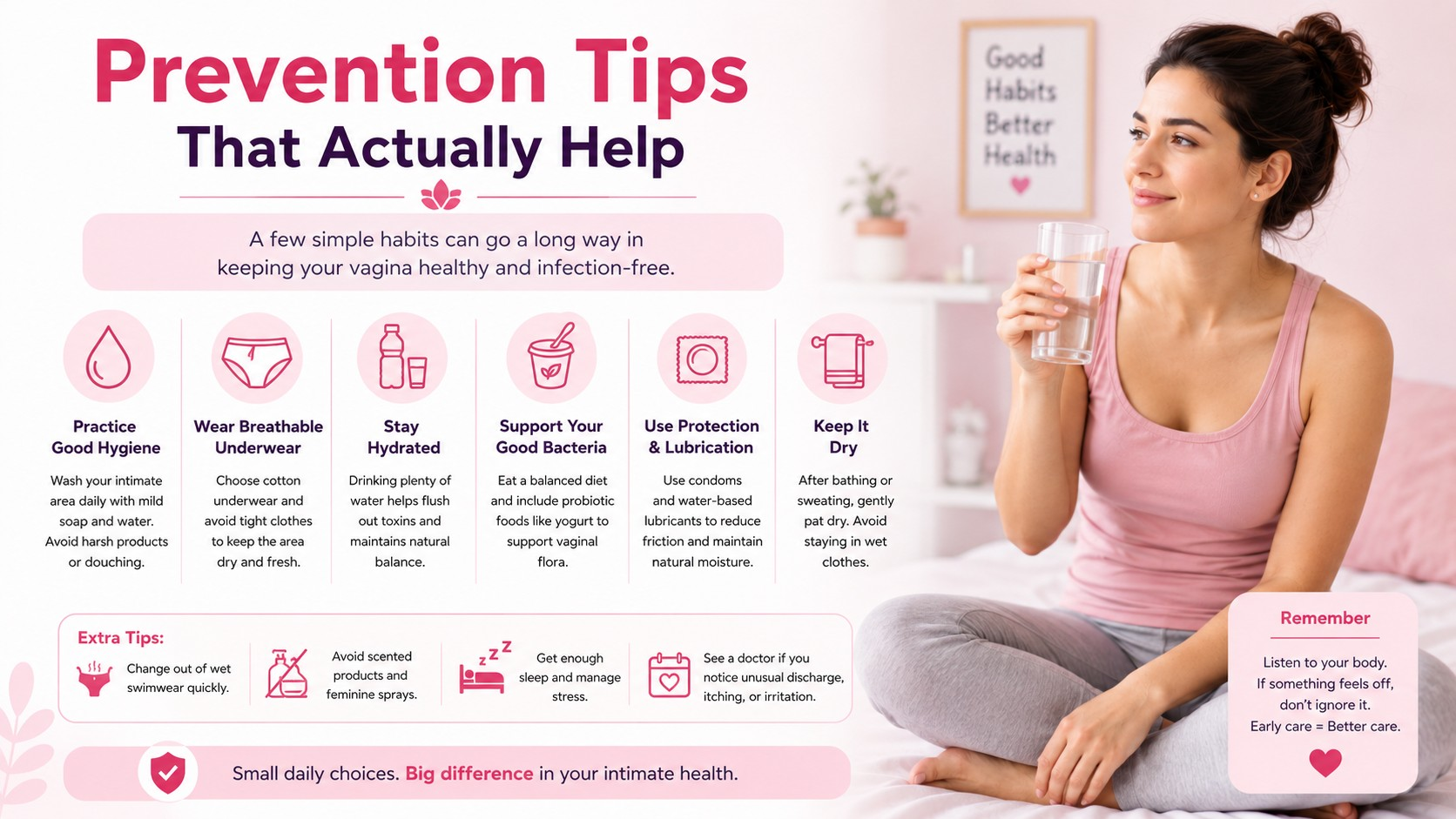
- Urinate shortly after sex to help flush bacteria out of the urethra before they can take hold
- Avoid douching entirely — it disrupts protective bacteria and does not “clean” the vagina in any beneficial way
- Choose unscented, pH-balanced products for washing and lubrication rather than heavily fragranced ones
- Wear breathable cotton underwear and avoid staying in wet swimwear or sweaty gym clothes for long periods
- Stay well hydrated, which supports more frequent, dilute urination
- Consider a probiotic formulated for vaginal health if infections recur often, though this is best discussed with your doctor rather than self-prescribed
- Manage blood sugar carefully if you have diabetes, since elevated glucose is a known driver of recurrent yeast infections
Treatment Options
Treatment always follows the actual diagnosis rather than guesswork:
- Yeast infections respond to antifungal treatment — oral fluconazole such as ZOCon 50 DT Tablet, or a topical clotrimazole suppository such as Candid-CL
- Bacterial vaginosis needs a prescription antibiotic, typically metronidazole or clindamycin, taken orally or applied vaginally as directed
- UTIs are treated with a targeted antibiotic course such as Urifast SR Tablet, confirmed by a urine test before starting
- Recurrent infections — three or more episodes in a year — usually warrant a longer conversation with a gynaecologist about underlying risk factors rather than repeated short courses of treatment
You can browse the full range of women’s health treatments in the Women Health category at PMC Herbals.
When to See a Doctor
Book an appointment if:
- Symptoms are new, or you are not sure which type of infection you have
- Symptoms do not improve within a few days of starting treatment
- Infections keep recurring — three or more times in a year
- You notice unusual sores, warts, or symptoms alongside a new sexual partner, which need STI testing
- You have fever, pelvic pain, or symptoms alongside a missed period or possible pregnancy
A gynaecologist or GP can examine you, take a swab or urine sample, and confirm exactly what you are dealing with rather than leaving you to guess between very differently treated conditions.
Frequently Asked Questions
1. Why do I get a yeast infection every time after sex?
Recurrent yeast infections after sex are often linked to the temporary rise in vaginal pH caused by semen, combined with individual risk factors such as antibiotic use, uncontrolled blood sugar, or a naturally sensitive vaginal ecosystem. If it happens consistently, a doctor can help identify the specific trigger.
2. Is bacterial vaginosis an STI?
No, BV is not classified as a sexually transmitted infection, but it is strongly associated with sexual activity, particularly with new or multiple partners. It can occur in women who have never been sexually active, though this is less common.
3. Can my partner give me a UTI?
Not directly in the way an infection is “given,” but sexual activity itself can push bacteria that are normally present near the vagina and anus into the urethra, which is why UTIs cluster around sexual activity so consistently, especially in women.
4. How do I know if it’s a yeast infection or bacterial vaginosis?
Yeast infections typically cause intense itching and thick white discharge with little odour, while bacterial vaginosis causes a thin greyish discharge with a distinct fishy smell and usually little to no itching. When it is not clear-cut, a doctor’s exam or a simple test is the most reliable way to know.
5. Does urinating after sex actually prevent infections?
It helps specifically with UTIs, by flushing bacteria out of the urethra before they can travel further up. It does not have a meaningful effect on yeast infections or bacterial vaginosis, which are governed by different mechanisms.
6. Can condoms cause vaginal infections?
Condoms themselves generally reduce infection risk, including STIs, but certain spermicides or non-lubricated latex can occasionally irritate sensitive skin. If you notice a pattern of irritation with a specific condom type, switching to an unscented, non-spermicidal option is worth trying.
7. Is it normal to get an infection after every new partner?
An occasional infection after a new partner is common, since your vaginal ecosystem is adjusting to new bacteria. Frequent infections with every new partner are worth discussing with a doctor, since safer sex practices and specific product choices can often reduce how often this happens.
8. Can I treat a yeast infection without seeing a doctor?
If you have had a confirmed yeast infection before and recognise the exact same symptoms, an over-the-counter or pharmacist-guided antifungal is often reasonable. If symptoms are new, unusual, or do not fully resolve, seeing a doctor is safer than repeatedly self-treating the wrong condition.
9. Why does the discharge smell different after sex specifically?
Semen itself has its own scent, and combined with the temporary pH shift it causes, discharge can smell different for a day or so after sex without indicating infection. A persistent strong, fishy odour is more suggestive of bacterial vaginosis and worth getting checked.
10. Can lubricant cause infections?
Certain lubricants, particularly those with added sugars, glycerin in high concentrations, or fragrance, can disrupt vaginal pH and feed yeast overgrowth in sensitive individuals. Choosing a pH-balanced, unscented, water-based lubricant reduces this risk.
Conclusion
Getting an infection after sex is common, treatable, and rarely a sign that anything is fundamentally wrong — it is mostly a predictable consequence of how sex temporarily disrupts a finely balanced vaginal ecosystem. The key is figuring out which of the three usual suspects, yeast, bacterial vaginosis, or a UTI, you are actually dealing with, since each needs a different treatment and guessing wrong just prolongs the discomfort.
A few simple habits — urinating after sex, avoiding douching, and choosing unscented products — meaningfully lower the odds. And if infections keep recurring, that is a signal to get a proper diagnosis rather than keep treating symptoms in the dark.
Browse women’s health treatments at PMC Herbals. Prescription required for all medicines.
Medical Disclaimer
This article is intended for general educational and informational purposes only. It is not medical advice, and it is not a substitute for consultation, diagnosis or treatment by a qualified healthcare professional.
Vaginal infections can have several different causes that require different treatments, and using the wrong one can worsen symptoms or delay proper treatment. Do not start any antifungal, antibiotic or vaginal treatment without a proper diagnosis from a doctor.
If you experience fever, pelvic pain, unusual sores or symptoms alongside a possible pregnancy, seek medical attention promptly.
PMC Herbals does not dispense prescription medicines without a valid prescription and does not accept liability for decisions made solely on the basis of this content.