










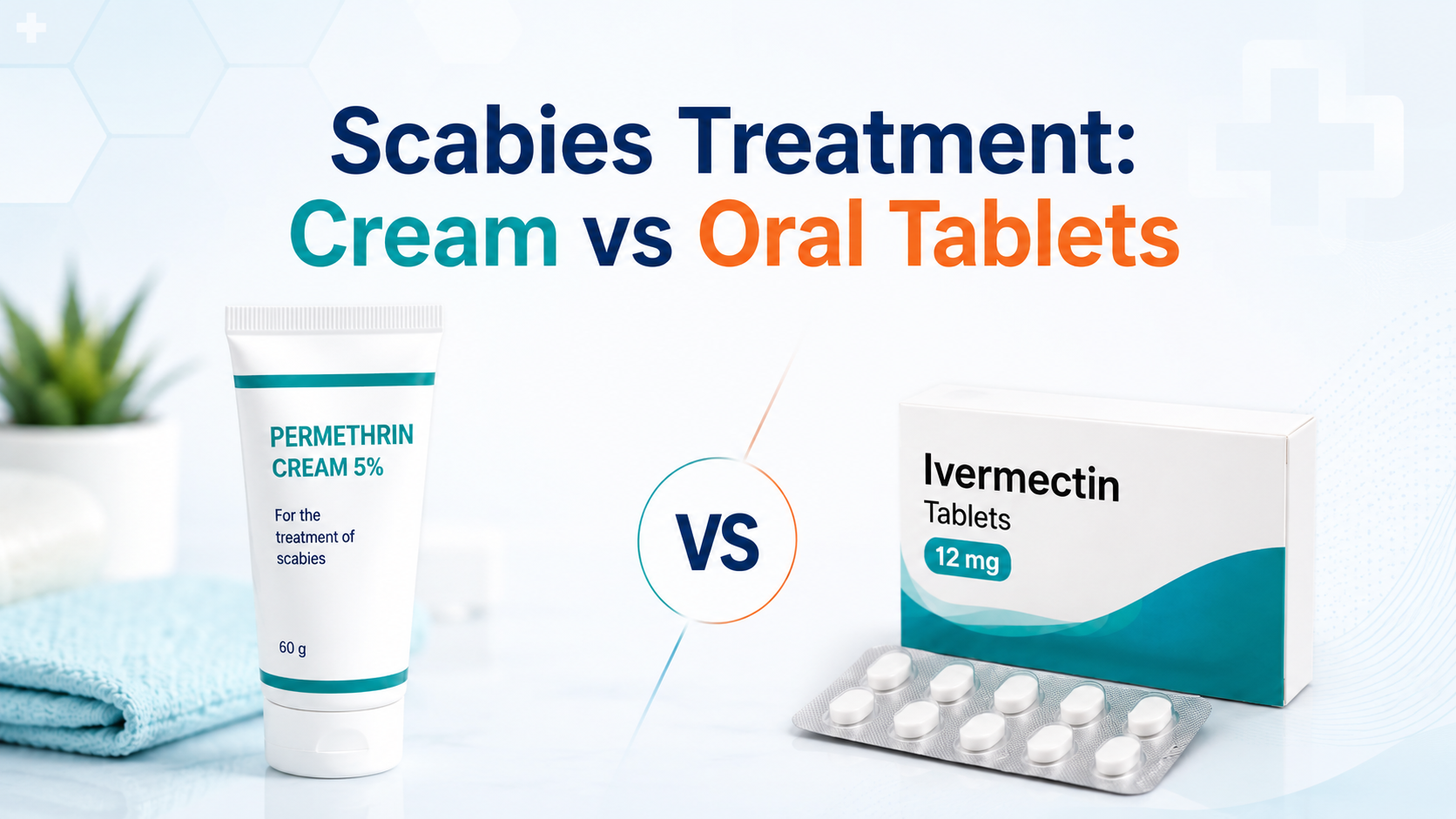
Scabies Treatment: Cream vs Oral Tablets – Which Is Better?
Scabies causes intense itching and a contagious rash, but it is treatable. The main prescription options are a scabies cream, especially 5% permethrin, and oral tablets for scabies, usually ivermectin.
Neither treatment is universally better. Permethrin is often preferred for routine cases, young children, and pregnancy, while ivermectin may be more practical when full-body cream application is difficult, or the infestation is widespread. Severe crusted scabies usually requires both treatments under medical supervision.
Medical disclaimer: This article is for educational purposes and does not replace diagnosis or treatment from a qualified healthcare professional. Never use veterinary ivermectin, agricultural insecticides, or unprescribed medicines to treat scabies.
What Is Scabies?
Scabies is a contagious skin infestation caused by the microscopic human itch mite, Sarcoptes scabiei var. hominis. The female mite burrows into the upper layer of the skin, where it lives and lays eggs. The body reacts to the mites, eggs, and waste products, causing an intensely itchy rash.
Scabies is not a sign of poor hygiene. Anyone can get it, and it spreads more easily where close contact is frequent, including homes, childcare centres, nursing facilities, shelters, hospitals, and other institutions.
Causes and Symptoms of Scabies
The direct cause of scabies is infestation with the human scabies mite. Symptoms may take four to eight weeks to appear after a first infestation, although the affected person can spread mites before symptoms begin. Reinfection may produce symptoms much sooner.
Common symptoms include:
Severe itching, especially at night
Small, red or skin-coloured bumps
Thin, raised, wavy or thread-like burrows
Scratch marks, crusts, or sores
Rash between the fingers
Lesions on the wrists, elbows, armpits, waist, buttocks, nipples, or genital area
Infants and young children may also develop a rash on the scalp, face, neck, palms, and soles. Older adults and people with weakened immunity may develop crusted scabies, a severe and highly contagious form involving thick or scaly skin and a large number of mites. Crusted scabies may not always cause intense itching.
Repeated scratching can break the skin and allow bacteria to enter. Increasing pain, warmth, swelling, pus, fever, or spreading redness may indicate a secondary bacterial infection.
How Does Scabies Spread?
Scabies usually spreads through prolonged, direct skin-to-skin contact. Household contact, caregiving, sharing a bed, and sexual contact are common transmission routes.
A quick handshake or brief hug usually does not spread ordinary scabies. Less commonly, mites may spread through recently used clothing, towels, or bedding. Transmission through objects is more likely with crusted scabies because the affected person can shed very large numbers of mites.
Pets do not cause human scabies. Animal mites may temporarily irritate human skin, but they cannot normally reproduce and establish a continuing human infestation.
How Is Scabies Diagnosed?
A doctor or dermatologist may diagnose scabies by examining:
The pattern and location of the rash
Whether itching becomes worse at night
The presence of visible burrows
Whether household members or close contacts have similar symptoms
Recent close physical or sexual contact
A clinician may confirm the diagnosis with dermoscopy, a skin scraping examined under a microscope, an adhesive-tape test, or a burrow-ink test. The goal is to identify a mite, egg, or mite waste.
A negative skin scraping does not completely rule out scabies. A person with classic scabies may have only a small number of mites, making them difficult to find.
Eczema, allergic contact dermatitis, hives, insect bites, folliculitis, and fungal infections can resemble scabies. Correct diagnosis is therefore important before starting treatment.
How Scabies Cream Works
Permethrin Cream
Permethrin cream 5% is one of the most commonly prescribed treatments for classic scabies. It affects sodium channels in the mite’s nerve-cell membranes, leading to paralysis and death. Only a small amount is normally absorbed through the skin when used correctly.
Permethrin must be applied over the entire prescribed skin area, not only on visible spots.
For most adults, application generally includes:
The skin from the neck down
Between the fingers and toes
Under the fingernails
The armpits and other skin folds
Around the navel
The buttocks and groin
The ankles, heels, and soles
Infants, young children, older adults, and people with scalp involvement may also require treatment of the head, hairline, neck, temples, and forehead. The exact application area should follow the product instructions and medical advice.
Permethrin is commonly left on for 8–14 hours and then washed off. A second application approximately one week later may be advised to eliminate newly hatched mites and reduce the risk of treatment failure.
Why Permethrin Treatment Sometimes Fails
A scabies cream may fail when it is:
Applied only to the rash
Washed off too early
Omitted from skin folds or under the nails
Removed during handwashing and not reapplied
Applied to some household members but not others
Used without treating sexual or close contacts
Reinfection from an untreated contact is often mistaken for medicine resistance.
Persistent itching alone does not mean the treatment failed. The allergic skin reaction can continue after the mites have been killed.
How Oral Tablets for Scabies Work
Ivermectin for Scabies
Ivermectin is an antiparasitic medicine that disrupts nerve and muscle activity in susceptible parasites, leading to paralysis and death. After the tablet is absorbed, the medicine reaches mites through the body.
For classic scabies, healthcare professionals commonly prescribe a weight-based dose followed by a second dose after 7–14 days. The second dose is important because ivermectin has limited activity against mite eggs.
The exact number of tablets must be calculated by a healthcare professional. It depends on:
Body weight
Age
Pregnancy status
Liver health
Other medicines
Type and severity of scabies
In the United States, oral ivermectin is not FDA-approved specifically for scabies, although it is included in CDC clinical guidance as a treatment option. Its approval and recommended use may differ between countries.
Where Ivecop 12 Tablet Fits
Ivecop 12 Tablet contains ivermectin 12 mg. It may be prescribed for suitable patients when oral ivermectin is selected. However, one 12 mg tablet is not automatically the correct dose for every person.
Because scabies treatment is weight-based, Ivecop 12 Tablet should only be taken after professional diagnosis and prescription. It should not be used simply because another person with scabies received the same tablet strength.
Scabies Cream vs Oral Tablets: Comparison
| Factor | Permethrin Cream 5% | Oral Ivermectin Tablets |
|---|---|---|
| Form | Cream applied directly to the skin | Tablets swallowed by mouth |
| Common role | Frequently used first-line treatment | Oral option for suitable patients |
| How it works | Disrupts mite nerve activity on treated skin | Acts systemically against mites |
| Schedule | Overnight application, often repeated after about seven days | Weight-based dose, usually repeated after 7–14 days |
| Convenience | Requires careful full-body application | Generally easier to administer |
| Main limitation | Skin areas can be missed | Not appropriate for every patient |
| Young children | Commonly used from two months of age under medical direction | Safety is not established below 15 kg |
| Pregnancy | Often preferred during pregnancy | Safety has not been established |
| Crusted scabies | Used repeatedly with systemic treatment | Used with a topical medicine |
| US regulatory status | FDA-approved for scabies | Used off-label for scabies |
CDC guidance considers properly used topical permethrin and oral ivermectin to have similar effectiveness for classic scabies. The practical choice depends on safety, age, pregnancy, medicine interactions, cost, availability, and the likelihood that treatment will be completed correctly.
Pros and Cons of Scabies Treatments
| Treatment | Pros | Cons |
|---|---|---|
| Permethrin cream | Extensive clinical use; limited systemic absorption; suitable for many children; often preferred during pregnancy | Messy and time-consuming; whole-body application is required; missed areas can cause failure; may temporarily irritate skin. |
| Oral ivermectin | Convenient; useful when topical application is difficult; practical for widespread disease and some outbreaks | Requires weight-based prescribing; repeat dose is usually needed; possible interactions; safety not established in pregnancy or children under 15 kg |
| Combination treatment | Treats mites through topical and systemic routes; important for crusted scabies | More complicated schedule; increased treatment burden; requires close medical supervision. |
Which Is the Best Treatment for Scabies?
The best treatment for scabies depends on the patient and the clinical situation.
Classic Scabies in a Healthy Adult
Either permethrin cream or prescribed ivermectin may be effective.
Permethrin is often selected first because of its long clinical history and direct action on the skin. Ivermectin may suit adults who cannot reliably complete a full-body cream application or who have practical difficulty using topical treatment.
Babies and Young Children
Permethrin is commonly used in children aged two months and older under medical supervision.
The safety of oral ivermectin has not been established in children weighing less than 15 kg. Infants younger than two months require a clinician-selected alternative, which may include compounded sulfur ointment in some countries.
Pregnancy
Permethrin is generally preferred during pregnancy. The clinician should provide specific application instructions and consider individual health factors.
Oral ivermectin should not be started during pregnancy unless a qualified specialist determines that the expected benefit outweighs the uncertainty or risk.
Older Adults or People With Limited Mobility
Tablets may be easier when limited mobility makes it difficult to apply cream to the back, feet, skin folds, or under the nails.
However, a caregiver may be able to assist with permethrin application. Before prescribing ivermectin, the clinician should review other medicines, possible interactions, and liver health.
Widespread or Difficult-to-Treat Scabies
Oral ivermectin may be considered when:
A large area of the body is affected.
Correct topical application is unlikely.
Previous topical treatment was completed correctly but failed.
Several people require coordinated treatment.
A healthcare facility is managing an outbreak.
Before assuming drug resistance, clinicians usually check for incorrect application, missed doses, untreated household members, reinfection, and an incorrect original diagnosis.
Crusted Scabies
Crusted scabies is a medical priority because it is highly contagious and can involve thousands or millions of mites.
Treatment generally includes repeated oral ivermectin together with frequent topical permethrin. A medicine that softens thick crusts may also be used to help the topical treatment reach the affected skin. The exact schedule depends on severity and must be supervised by an experienced healthcare professional.
Can Permethrin and Ivermectin Be Used Together?
Yes. A doctor may prescribe both treatments for:
Crusted scabies
Severe or extensive infestation
Recurrent scabies
Difficult-to-control outbreaks
Cases that have not responded to correctly completed treatment
Combination therapy attacks mites through the skin and through systemic circulation.
Do not combine the medicines without medical guidance. Crusted-scabies treatment may involve several oral doses, repeated topical applications, infection-control precautions, and coordinated treatment of household members or carers.
Home Care Tips During Treatment
Medication is only one part of how to treat scabies successfully.
On the first day of treatment:
Treat household members and close contacts at the same time when advised.
Wash clothing, towels, and bedding used during the previous three days.
Use hot water and a hot dryer cycle, or dry-clean suitable items.
Seal unwashable items in a closed plastic bag for several days to one week.
Trim fingernails and clean underneath them.
Avoid sharing clothing, bedding, or towels.
Avoid prolonged skin contact until treatment has been completed as directed.
Vacuum commonly used sleeping areas and upholstered furniture.
CDC guidance states that temperatures above 50°C or 122°F for at least 10 minutes can kill mites and eggs. Mites usually survive only two to three days away from human skin.
Routine household fumigation is unnecessary.
For continuing itching, a clinician may recommend:
A fragrance-free moisturiser
Cool compresses
An oral antihistamine
Pramoxine lotion
A mild topical anti-inflammatory treatment
Do not reapply scabicide every time the skin itches. Excessive permethrin use can irritate the skin and make the rash feel worse.
How to Prevent Reinfection
Reinfection is a common reason scabies appears to return.
To reduce the risk:
Complete every prescribed dose or application.
Do not skip the second treatment.
Treat household members and close contacts together.
Avoid intimate or prolonged skin contact until treatment is completed.
Clean recently used clothing, towels, and bedding.
Do not share prescription medicine.
Inform the doctor if anyone has crusted skin or weakened immunity.
Follow institutional outbreak guidance when multiple people are affected.
Because mites generally survive only two to three days away from human skin, extreme cleaning, pesticide spraying, or discarding mattresses and furniture is usually unnecessary.
Possible Side Effects
Permethrin Cream Side Effects
Common or generally mild effects include:
Temporary burning
Stinging
Itching
Redness
Tingling or numbness
Mild rash
Permethrin may temporarily worsen the itching or redness already caused by scabies. Avoid contact with the eyes and mouth. If the cream enters the eyes, rinse them thoroughly with water.
Seek medical advice if irritation is severe, persistent, or accompanied by facial swelling, breathing difficulty, or widespread hives.
Oral Ivermectin Side Effects
Possible side effects include:
Dizziness
Nausea or vomiting
Diarrhoea
Headache
Tiredness
Abdominal discomfort
Rash or temporarily increased itching
Tell the prescriber about liver disease and every prescription medicine, non-prescription medicine, or supplement being taken.
Seek urgent care for:
Fainting
Confusion
Difficulty breathing
Facial swelling
Severe or blistering rash
Unusual weakness
Problems with balance or coordination
Other significant neurological symptoms
When to See a Doctor
Consult a healthcare professional when:
Scabies has not been professionally diagnosed.
A baby or young child may be affected.
The patient is pregnant or breastfeeding.
The patient has a weakened immune system.
The rash is thick, crusted, widespread, or worsening.
Several household members or facility residents are affected.
There are signs of bacterial infection.
New burrows or bumps appear after treatment.
Itching continues beyond two to four weeks.
Correct treatment has not improved the condition.
A significant medicine reaction develops.
Itching can remain for several weeks after successful treatment. However, new burrows, new pimple-like lesions, or visible live mites may indicate continuing infestation or reinfection.
Seek urgent medical care for fever with spreading redness, severe pain, pus, confusion, breathing difficulty, or facial swelling.
Frequently Asked Questions
1. Is scabies cream better than ivermectin tablets?
Neither option is best for every patient. Permethrin often suits routine cases, children, and pregnancy. Ivermectin may be easier for suitable adults, widespread infestations, or people who cannot apply cream correctly.
2. How quickly does scabies treatment work?
The medicine begins killing mites after correct use, but allergic itching may continue for two to four weeks. New burrows or new lesions are more concerning than itching alone.
3. How many times should permethrin cream be applied?
Many treatment plans use one complete application followed by another approximately seven days later. Follow the prescribed schedule because the patient’s age and disease severity may affect the instructions.
4. How many ivermectin doses are needed for scabies?
Classic scabies commonly requires two weight-based doses separated by 7–14 days. Crusted scabies may require several doses together with repeated topical treatment.
5. Can I take Ivecop 12 Tablet without a prescription?
No. Ivecop 12 Tablet contains ivermectin 12 mg, but the correct scabies dose depends on body weight and individual health factors. It should only be used after diagnosis and prescription.
6. Can scabies return after successful treatment?
Yes. Reinfection can occur when household members, sexual partners, carers, or other close contacts are not treated at the same time.
7. Does continuing itching mean treatment failed?
Not necessarily. Post-scabies itching may continue for several weeks. Treatment failure is more likely when new burrows, new bumps, or live mites appear.
8. Can permethrin and ivermectin be used together?
Yes, when prescribed. Combination treatment is commonly used for crusted, severe, recurrent, or difficult-to-treat scabies.
9. Can over-the-counter products cure scabies?
In the United States, no non-prescription product has been approved to treat human scabies. Home remedies may reduce discomfort but should not replace prescribed scabies treatment.
10. When is someone with scabies no longer contagious?
Many people can return to work, school, or childcare the day after appropriate treatment, subject to local rules. Crusted scabies requires stricter medical and infection-control precautions.
Conclusion
The choice between a scabies cream and oral tablets for scabies depends on age, pregnancy, disease severity, ability to apply treatment correctly, other medicines, and local clinical guidance.
Permethrin cream is often the practical first choice for classic scabies and is suitable for many children. Ivermectin for scabies can be an effective and convenient option for appropriate patients, particularly when topical treatment is difficult to apply. Crusted scabies usually requires both oral ivermectin and topical treatment.
The most important parts of successful scabies treatment are correct diagnosis, complete treatment, simultaneous management of close contacts, and prevention of reinfection. A doctor or dermatologist can determine whether continuing itching represents normal healing, reinfection, or active scabies.
Lorem ipsum dolor sit amet, consectetur adipiscing elit. Ut elit tellus, luctus nec ullamcorper mattis, pulvinar dapibus leo.