











Most conversations about male sexual health jump straight to erectile dysfunction. Far less gets said about the opposite kind of frustration — taking so long to reach orgasm during sex that it stops feeling enjoyable for either partner, or not being able to finish at all. This is called delayed ejaculation, and it is more common, and more treatable, than most men realise.
If sex regularly takes 30 minutes or more of continuous stimulation before you can climax, or you often cannot climax at all despite wanting to, you are not alone and you are not “broken.” Delayed ejaculation has real, identifiable causes — some psychological, some physical, some simply a side effect of a medicine you are already taking — and most of them respond well to the right approach.
This guide explains what delayed ejaculation actually is, why it happens, how doctors diagnose it, and what genuinely helps — from simple lifestyle changes to medical treatment. We will also look at where delayed ejaculation overlaps with erectile dysfunction, since the two conditions often travel together and get confused with one another.
- What Is Delayed Ejaculation?
- How Common Is It?
- Causes of Delayed Ejaculation
- Symptoms and When It Becomes a Problem
- How Is Delayed Ejaculation Diagnosed?
- Solutions and Treatment Options
- Delayed Ejaculation and Erectile Dysfunction: Where They Overlap
- Lifestyle Changes That Help
- Tips for Talking to Your Partner
- When to See a Doctor
- Frequently Asked Questions
- Conclusion
- Medical Disclaimer
What Is Delayed Ejaculation?
Delayed ejaculation (sometimes called retarded ejaculation, or impaired ejaculation) is a persistent difficulty or inability to reach orgasm and ejaculate, despite having normal desire and adequate sexual stimulation. It can happen with a partner, during masturbation, or both.
Doctors generally consider it a concern when it:
- Takes an unusually long time — often defined as more than 30 minutes of active stimulation
- Happens almost every time, or nearly every time, you have sex
- Causes you or your partner distress, frustration, or avoidance of intimacy
- Is a change from your usual pattern, not simply “how you have always been”
There is a wide natural range in how long ejaculation takes, and occasional slow performance — after alcohol, when tired, or when anxious about a new partner — is completely normal and not delayed ejaculation. The diagnosis is about a persistent, distressing pattern, not a single slow night.
It is worth separating this from two other conditions it is often confused with:
- Erectile dysfunction (ED) is difficulty getting or keeping an erection firm enough for sex. A man can have a completely normal erection and still be unable to ejaculate — that is delayed ejaculation, not ED.
- Anorgasmia is the broader medical term for difficulty reaching orgasm at all, which in men usually shows up specifically as delayed or absent ejaculation.
How Common Is It?
Delayed ejaculation is the least common of the major male sexual dysfunctions — far less common than premature ejaculation or erectile dysfunction — but it is not rare. Estimates suggest it affects somewhere between 1 in 20 and 1 in 3 men at some point, depending on how strictly it is defined and the age group studied. Rates rise with age, largely because the medical causes behind it (nerve changes, blood flow changes, more medications) become more common later in life too.
Because it is talked about so much less than ED, many men assume something is uniquely wrong with them, or feel too embarrassed to bring it up with a doctor. In reality, it is one of the more well-understood and manageable forms of sexual dysfunction once the underlying cause is identified.
Causes of Delayed Ejaculation
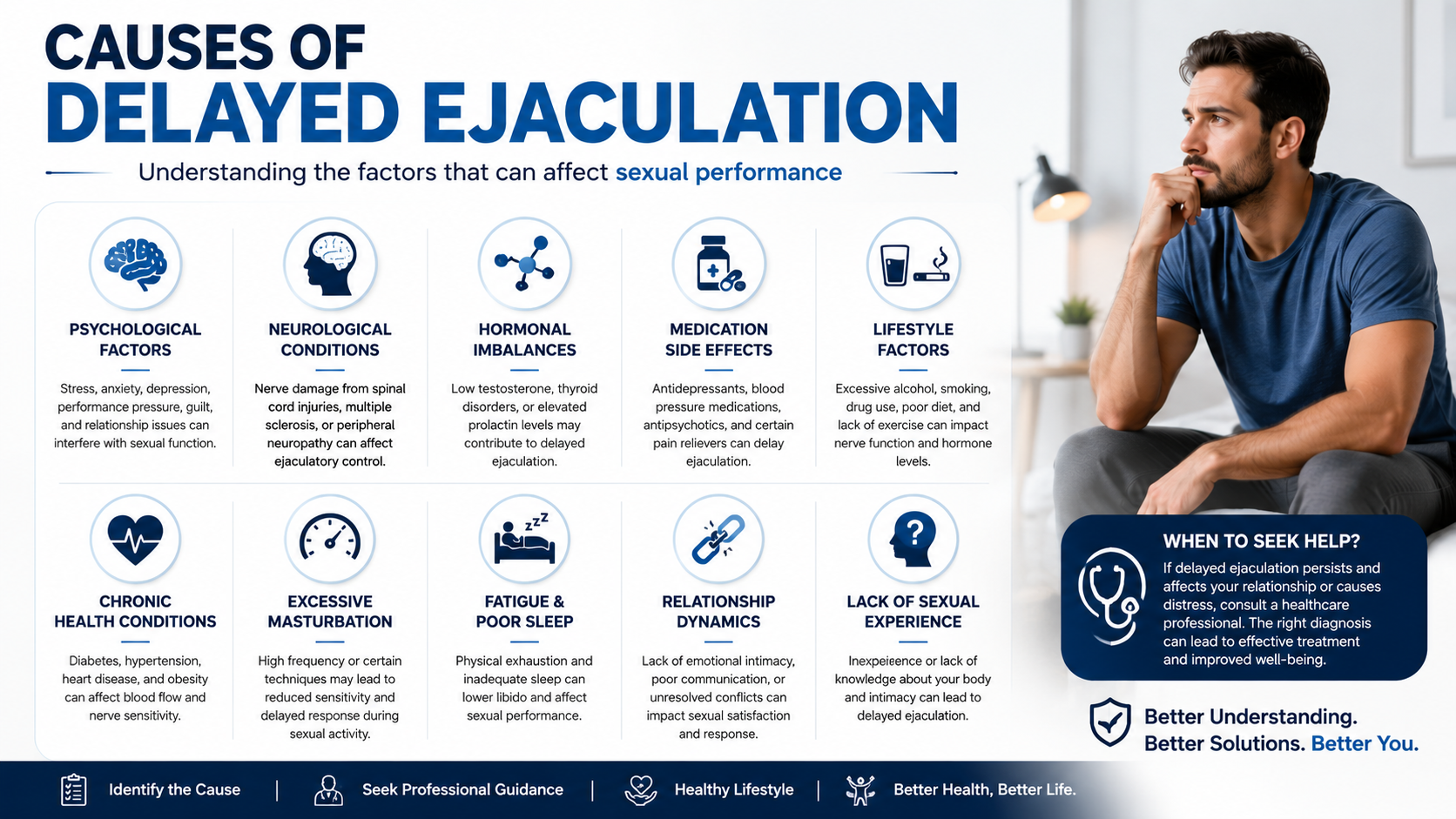
Delayed ejaculation rarely has just one cause — it is usually a mix of a physical predisposition and a psychological or situational trigger. Broadly, the causes fall into five groups.
Psychological causes
- Performance anxiety — worrying about “taking too long” often makes it take even longer, creating a self-reinforcing cycle
- Depression and anxiety disorders, which blunt sexual response generally
- Relationship stress or unresolved conflict with a partner
- A mismatch between real-life sex and masturbation habits — men who masturbate in a specific, intense way (fast, firm grip, particular visual stimulation) can find it hard to reach the same intensity during partnered sex
- Past sexual trauma or a strict upbringing around sex, which can create subconscious inhibition
- Cultural or religious guilt associated with sexual pleasure
Medications
This is one of the most common and most overlooked causes. Medicines known to delay or block ejaculation include:
- SSRIs and SNRIs (common antidepressants such as sertraline, paroxetine, fluoxetine, venlafaxine) — this is by far the most frequent medication-related cause
- Antipsychotics
- Some blood pressure medicines, particularly certain beta-blockers and diuretics
- Opioid painkillers
- Alcohol and recreational drug use, both acutely and with chronic use
If delayed ejaculation started shortly after beginning a new medicine, the timing itself is usually the biggest clue.
Chronic health conditions
- Diabetes, which can damage the nerves involved in ejaculation over time (diabetic neuropathy)
- Multiple sclerosis and other neurological conditions
- Low testosterone (hypogonadism)
- Thyroid disorders
- Prostate conditions, including the after-effects of prostate surgery
Nerve or surgical damage
Surgery involving the prostate, bladder, or rectum, and injuries to the spinal cord or pelvic nerves, can physically interrupt the nerve signals needed for ejaculation.
Age
Ejaculation naturally tends to take longer with age, due to gradual changes in nerve sensitivity, testosterone levels, and blood flow. This is a spectrum rather than a sudden switch, but it means delayed ejaculation becomes more common — and often more noticeable — from the 50s onward.
Symptoms and When It Becomes a Problem
The core symptom is simple: it consistently takes a long time, or proves impossible, to ejaculate despite wanting to and being adequately aroused. But it is worth recognising the pattern in a bit more detail:
- Needing prolonged, sometimes uncomfortable, stimulation to climax
- Losing the erection or losing interest before climax is reached because of how long it is taking
- Being able to ejaculate through masturbation but not with a partner (situational delayed ejaculation)
- Never being able to ejaculate under any circumstances (lifelong or generalised delayed ejaculation)
- Growing avoidance of sex or intimacy because of frustration or embarrassment
- Strain in the relationship, particularly if a partner misreads the delay as a lack of attraction
If any of this is a recent change, is causing distress, or is affecting your relationship, it counts as a problem worth addressing — regardless of whether it technically crosses a 30-minute definition.
How Is Delayed Ejaculation Diagnosed?
There is no single blood test for delayed ejaculation. Diagnosis is mostly built from a careful history, sometimes supported by a physical exam and lab work. A typical assessment includes:
- A detailed sexual history — when it started, whether it happens in all situations or only some, how long it has been going on, and whether it is linked to a specific event, relationship, or medicine
- A full medication and supplement review, since so many cases are drug-related
- A physical exam, checking for signs of nerve problems, low testosterone, or prostate issues
- Blood tests, commonly testosterone, thyroid function, and blood sugar (to screen for diabetes)
- A mental health screen for depression, anxiety, or relationship distress, since these are frequently part of the picture
Being honest with your doctor about masturbation habits, alcohol use, and relationship context is uncomfortable for a lot of men, but it is usually the fastest route to the right answer — many cases become clear from the history alone, without any tests at all.
Solutions and Treatment Options

Treatment follows the cause. There is no single pill that fixes delayed ejaculation the way sildenafil-type medicines target erectile dysfunction — because delayed ejaculation is not one condition with one mechanism, it is a symptom with several possible roots.
Review and adjust medications
If an SSRI, antipsychotic, or blood pressure medicine is the culprit, options usually include lowering the dose, switching to an alternative with a lower sexual side-effect profile, or adding a second medicine to counteract the effect. Never stop or change a prescribed medicine, especially an antidepressant, without your prescriber’s guidance — stopping SSRIs abruptly can cause withdrawal effects and put your mental health at risk.
Treat the underlying medical condition
Correcting low testosterone, managing blood sugar tightly in diabetes, or treating a thyroid disorder can meaningfully improve ejaculatory function, sometimes on its own.
Sex therapy and behavioural techniques
For psychologically driven cases, a sex therapist or counsellor can help with:
- Reducing performance anxiety through structured, pressure-free intimacy exercises
- Retraining arousal patterns if masturbation habits have created a mismatch with partnered sex
- Working through relationship tension that is feeding into the problem
- Techniques such as “stop-start” stimulation and sensate focus, which rebuild a natural, responsive pattern of arousal
Couples counselling
Because delayed ejaculation so often affects two people, not one, therapy that includes the partner tends to work better than therapy focused on the man alone. It also helps prevent the partner from misinterpreting the delay as disinterest.
Addressing anxiety and depression directly
Where an underlying mood or anxiety disorder is driving the problem, treating that condition — through therapy, and sometimes medication adjustments made carefully with a psychiatrist — often improves ejaculatory function as a side effect of the primary treatment working.
Delayed Ejaculation and Erectile Dysfunction: Where They Overlap
Delayed ejaculation and erectile dysfunction are different conditions with different mechanisms, but in real life they frequently show up in the same man, for a few overlapping reasons:
- The same underlying conditions — diabetes, low testosterone, cardiovascular disease, certain medications — can affect both erections and ejaculation
- Performance anxiety about ejaculation can, over time, make it harder to stay erect during the prolonged stimulation delayed ejaculation requires
- Conversely, anxiety about maintaining an erection can make a man rush or “chase” ejaculation in a way that paradoxically makes it harder to reach
When both conditions are present together, a doctor may address the erectile side of things alongside psychological or medication-related work on the ejaculatory delay. PDE5 inhibitors are not a direct treatment for delayed ejaculation — they work by improving blood flow to support an erection, not by speeding up orgasm — but in men who have genuine comorbid ED, restoring reliable, confident erections can remove one major source of the performance pressure that keeps a delayed ejaculation cycle going. This is prescribed on a case-by-case basis, and only after a doctor has assessed both issues properly.
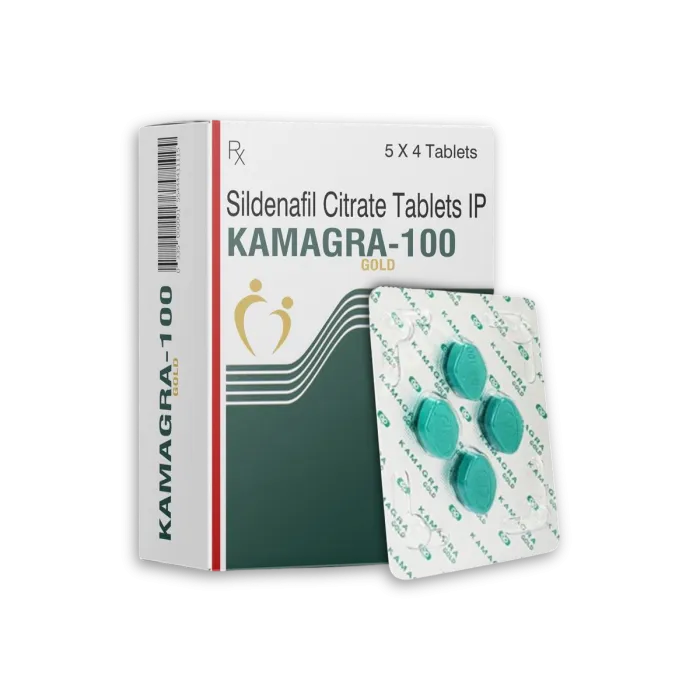
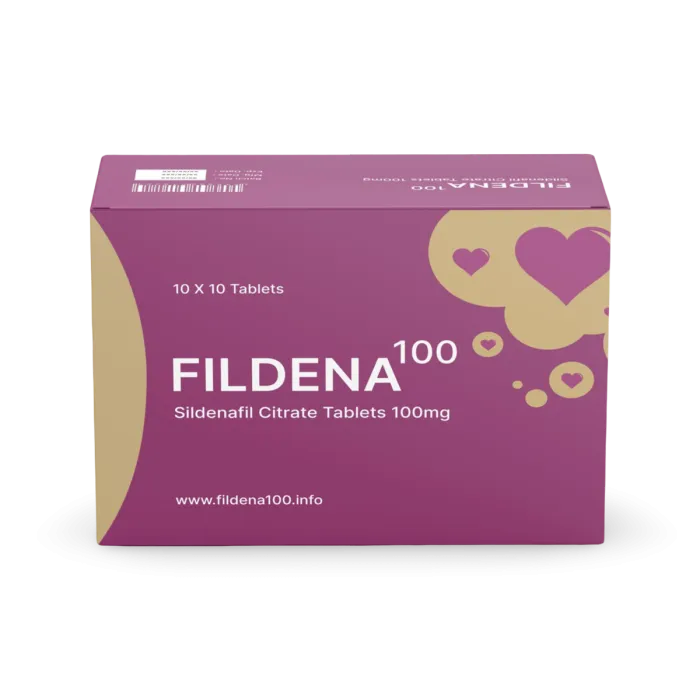
This class of medicine includes sildenafil-based tablets such as Cenforce 100 Mg Sildenafil Citrate Tablet, Suhagra 100mg Tablet, Kamagra Gold Sildenafil 100 Mg Tablet, and Fildena 100 Mg Sildenafil Citrate Tablets, as well as Avanafil 100mg Tablet, a newer, faster-acting PDE5 inhibitor. All of these are prescription medicines for erectile dysfunction — none of them are indicated or approved to treat delayed ejaculation on its own, and none should be used without a prescription and a doctor’s assessment of which condition is actually driving your symptoms. You can browse the full range in the Men’s Health category at PMC Herbals.

Lifestyle Changes That Help

Several everyday habits genuinely move the needle for many men, particularly when the cause is mild or partly psychological:
- Cut back on alcohol, especially before sex — it is one of the most common and most reversible contributors
- Rethink masturbation habits. If you use a very firm grip, high-speed technique, or specific pornography that does not match partnered sex, gradually adjusting your solo technique to feel more like real intimacy can retrain your response
- Manage stress and get enough sleep. Chronic stress and poor sleep both blunt sexual response
- Exercise regularly. Good cardiovascular health supports both blood flow and nerve function
- Limit recreational drug use, which can dull sensation and delay orgasm even long after use
- Keep chronic conditions under control — steady blood sugar in diabetes and healthy testosterone levels both support normal ejaculatory function
- Build in more foreplay and varied stimulation, rather than relying on a single, repetitive pattern
None of these replace a proper diagnosis if the cause turns out to be medical, but they are a sensible, low-risk starting point while you work out what is going on.
Tips for Talking to Your Partner
Delayed ejaculation is often harder on the relationship than the mechanics suggest, mostly because it gets misread. A few things help:
- Say it plainly, early. Most partners assume the worst — boredom, lack of attraction, infidelity — when the real explanation is usually medical or psychological and has nothing to do with them.
- Frame it as “our issue to solve,” not “my problem.” Couples who approach it as a team tend to see faster improvement than men who try to hide or manage it alone.
- Take the pressure off a specific outcome. Agreeing in advance that a session does not have to end in ejaculation removes a huge amount of performance anxiety.
- Consider a session or two with a sex therapist together. It normalises the conversation and often surfaces things neither partner would raise alone.
When to See a Doctor
Book an appointment if:
- The pattern has lasted more than a few weeks and is not improving
- It started soon after beginning a new medication
- It is causing you distress, anxiety, or avoidance of sex
- It is affecting your relationship
- You have other symptoms alongside it — reduced libido, fatigue, numbness, or urinary symptoms — which can point to a hormonal, neurological, or prostate-related cause
A GP is a reasonable first stop and can refer you to a urologist, endocrinologist, or sex therapist depending on what the history suggests.
Frequently Asked Questions
1. What exactly counts as delayed ejaculation?
There is no single universal cutoff, but doctors generally consider it a concern when reaching orgasm consistently takes more than about 30 minutes of active stimulation, happens almost every time you have sex, and causes you or your partner distress.
2. Can delayed ejaculation be cured?
Many cases improve significantly or resolve once the underlying cause is addressed — whether that is adjusting a medication, treating a hormonal imbalance, or working through anxiety with therapy. Some cases, particularly those tied to nerve damage from surgery, are more difficult to fully reverse but can still improve with the right approach.
3. Is delayed ejaculation the same as low libido?
No. Libido is your desire for sex; delayed ejaculation is a difficulty reaching climax despite adequate arousal and stimulation. You can have strong desire and still struggle to ejaculate, and the two can occur together or completely independently.
4. Can antidepressants really cause this?
Yes, very commonly. SSRIs in particular are one of the leading causes of delayed ejaculation. If your symptoms started after beginning or increasing the dose of an antidepressant, mention this to your prescriber — do not stop the medication yourself.
5. Does delayed ejaculation mean I also have erectile dysfunction?
No, they are separate conditions, and many men with delayed ejaculation have completely normal erections. That said, the two do overlap often enough that a doctor will usually check for both.
6. Can PDE5 inhibitors like sildenafil treat delayed ejaculation?
Not directly — they are approved and designed to treat erectile dysfunction, not delayed ejaculation. In men who have both conditions, treating the erectile side can sometimes ease the performance anxiety that is worsening the ejaculatory delay, but this is a secondary, individualised effect, not a direct cure, and should only be used under medical guidance.
7. Is it normal for this to get worse with age?
To some extent, yes — ejaculation naturally tends to take longer as men get older, due to gradual nerve and hormonal changes. A sudden or significant change, rather than a slow drift over years, is more likely to have an identifiable, treatable cause.
8. Can stress alone cause delayed ejaculation?
Yes. Chronic stress, anxiety, and relationship tension are among the most common non-medical causes, and they are also some of the most responsive to treatment through therapy and lifestyle changes.
9. Should I stop drinking alcohol completely?
Not necessarily, but cutting back — particularly avoiding heavy drinking before sex — is one of the simplest and most effective changes many men make, since alcohol is a well-documented contributor to delayed ejaculation.
10. What is the first step if I think I have this?
Start with an honest conversation with a GP. Bring a list of your current medications, be upfront about alcohol and masturbation habits, and describe when the pattern started. Most of the diagnostic picture comes from this conversation alone.
Conclusion
Delayed ejaculation is under-discussed, but it is well understood medically and, in most cases, genuinely treatable. The path forward almost always starts with identifying the actual cause — a medication, a hormonal issue, performance anxiety, or a habit that has drifted out of sync with partnered sex — rather than guessing at a fix.
If erectile dysfunction is part of the picture too, that side of things can be treated separately and safely under medical supervision, alongside whatever is addressing the delayed ejaculation itself. The two do not have to be solved with the same tool, and no single medication treats both.
The most useful thing you can do today is simply stop treating it as a private embarrassment and start treating it as a normal medical question — because that is exactly what it is.
Browse prescription men’s health treatments in the Men’s Health category at PMC Herbals. Prescription required for all medicines.
Medical Disclaimer
This article is intended for general educational and informational purposes only. It is not medical advice, and it is not a substitute for consultation, diagnosis, or treatment by a qualified healthcare professional.
Delayed ejaculation can have psychological, medication-related, or underlying medical causes, and the right treatment depends entirely on identifying which of these applies to you. Do not start, stop, or change any medication — including antidepressants or erectile dysfunction treatments — based on the information in this article. PDE5 inhibitors such as sildenafil and avanafil are prescription medicines approved for erectile dysfunction; they are not an approved treatment for delayed ejaculation and should only be used under medical supervision.
If you experience sudden sexual dysfunction alongside numbness, weakness, urinary symptoms, or chest pain, seek medical attention promptly, as these can indicate an underlying condition that needs urgent evaluation.
PMC Herbals does not dispense prescription medicines without a valid prescription and does not accept liability for decisions made solely on the basis of this content.