










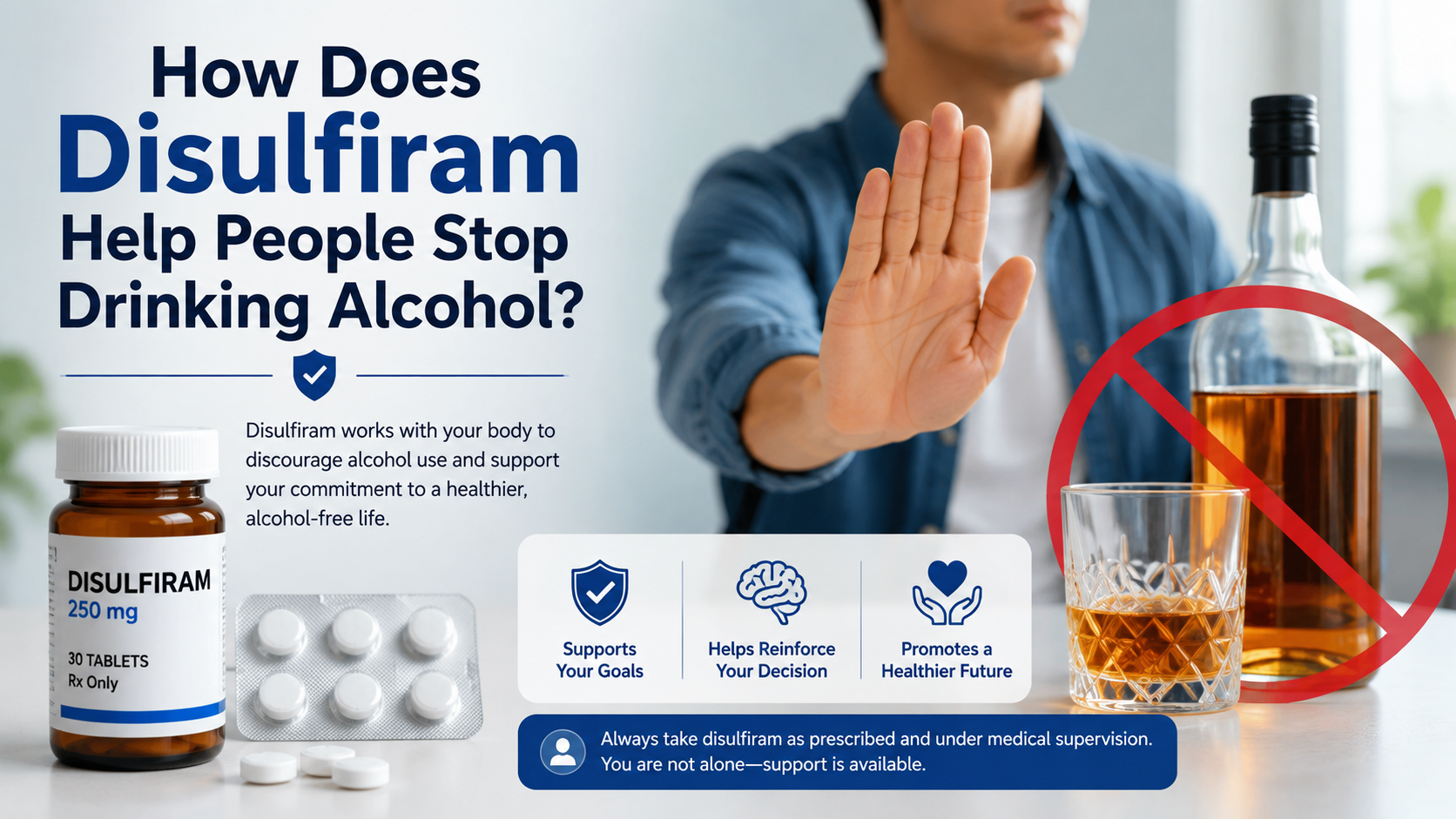
How Does Disulfiram Help People Stop Drinking Alcohol?
Deciding to stop drinking is one of the hardest steps someone can take, and for many people, willpower alone isn’t enough to get through it. This is where medications like Disulfiram can play a role. Disulfiram for alcohol dependence is one of the oldest and most well-studied medical treatments used to support people trying to stay away from alcohol — but it works in a very different way from what many people expect.
This article explains how Disulfiram works, what it can and cannot do, what happens if you drink alcohol while taking it, and why it should always be used under a doctor’s supervision.
What Is Disulfiram?
Disulfiram is a prescription medicine that has been used since the 1950s to help people who are trying to stay abstinent from alcohol. It is not a cure for alcohol use disorder, and it does not reduce cravings the way some other medications do. Instead, it works purely as a deterrent — it creates a strong, unpleasant physical reaction if alcohol is consumed, which discourages drinking.
Disulfiram is typically prescribed as part of a broader treatment plan that includes counselling and behavioural support, not as a standalone fix. It is available under brand names such as Dizone Tablet and Disulfree-250 Tablet, which contain Disulfiram as their active ingredient.
How Disulfiram Works
To understand how Disulfiram works, it helps to know what normally happens when the body processes alcohol.
When you drink alcohol, your liver breaks it down in two main steps:
- Alcohol is converted into a chemical called acetaldehyde.
- Acetaldehyde is then broken down further into harmless substances by an enzyme called aldehyde dehydrogenase.
Disulfiram blocks that second enzyme. This means acetaldehyde builds up in the body instead of being broken down properly. The result is a rapid, unpleasant set of symptoms if alcohol is consumed — something known as the disulfiram-ethanol reaction.
Because this reaction is so unpleasant, the medicine works psychologically as much as physically: knowing that drinking will trigger a bad reaction can help reinforce a person’s decision not to drink in the moment.
Disulfiram Is a Deterrent, Not a Cure
This is one of the most important things to understand about this medication. Disulfiram does not:
- Cure alcohol use disorder
- Reduce or eliminate cravings for alcohol
- Treat the underlying psychological or emotional causes of drinking
- Work if a person is not motivated to stay abstinent
What it does do is add a strong practical barrier between the decision to drink and actually drinking, buying time and reinforcing commitment during a person’s recovery. It is most effective when someone has already decided they want to stop drinking and needs support to follow through on that decision, especially during moments of temptation or impulse.
What Happens If You Drink Alcohol While Taking Disulfiram
The disulfiram-ethanol reaction can begin within 10 to 30 minutes of consuming alcohol and can include:
- Flushing and redness of the face and neck
- Throbbing headache
- Nausea and vomiting
- Chest pain and heart palpitations
- Difficulty breathing
- Sweating
- Low blood pressure and dizziness
- Blurred vision and confusion
In more severe cases, this reaction can cause dangerously low blood pressure, irregular heart rhythms, seizures, or, rarely, more serious cardiovascular events. The severity of the reaction generally depends on how much alcohol is consumed and individual sensitivity, but it can be unpredictable, which is exactly why the medication works as a deterrent.
It’s also worth knowing that alcohol doesn’t only come from drinks — it can be present in some cough syrups, mouthwashes, sauces, and certain topical products. People taking Disulfiram are usually advised to check product labels carefully and avoid any source of alcohol, not just beverages.
Common Side Effects and Safety Precautions
Even without drinking alcohol, Disulfiram can cause side effects on its own, particularly in the first few weeks. These can include:
- Drowsiness or fatigue
- Headache
- Metallic or garlic-like taste in the mouth
- Skin rash
- Mild gastrointestinal upset
Less commonly, Disulfiram has been associated with liver problems, so doctors often monitor liver function with blood tests before starting treatment and periodically afterward. It can also interact with a number of other medications, including certain blood thinners, antidepressants, and medications for seizures, so it’s important to give your doctor a full list of everything you’re taking.
Disulfiram is not suitable for everyone. It is generally avoided in people with severe heart disease, significant liver disease, psychosis, or those who are pregnant, and it should never be started while someone is still under the influence of alcohol.
Why Disulfiram Should Be Taken Under Medical Supervision
Because of the seriousness of the disulfiram-ethanol reaction and the medication’s potential interactions and side effects, Disulfiram should only be started, adjusted, or stopped under the guidance of a doctor. Medical supervision typically involves:
- A health check and blood tests before starting treatment
- A clear discussion of what to expect and what to avoid
- Regular follow-up appointments to monitor for side effects
- Support in managing the psychological side of staying abstinent
Self-medicating with Disulfiram, adjusting the dose independently, or combining it with alcohol “to test it” is genuinely dangerous and should never be attempted.
Stopping Alcohol Safely: Why You Shouldn’t Quit Suddenly Without Advice
It’s important to separate two different things: taking Disulfiram to stay abstinent, and the process of physically stopping drinking in the first place. If someone is physically dependent on alcohol — meaning their body has adapted to regular, heavy drinking — suddenly stopping without medical support can be dangerous.
Alcohol withdrawal can cause symptoms ranging from anxiety, tremors, and sweating to, in severe cases, seizures and a life-threatening condition called delirium tremens. This is why stopping alcohol safely, particularly for people with heavy or long-term drinking patterns, usually needs to happen under medical supervision, sometimes with a structured detox process, before a medication like Disulfiram is even introduced. Disulfiram is not used to manage acute withdrawal — it’s used afterward, to help support continued abstinence.
If you or someone you know is dependent on alcohol and wants to stop, the safest first step is speaking to a doctor rather than stopping abruptly alone.
The Role of Counselling and Behavioural Support
Medication alone rarely addresses the full picture of alcohol use disorder. Most treatment guidelines recommend combining Disulfiram with:
- Individual or group counselling
- Cognitive behavioural therapy (CBT)
- Support groups such as Alcoholics Anonymous or similar peer-support programmes
- Family or relationship support, where relevant
- Ongoing management of any underlying mental health conditions
This combined approach addresses the psychological and social factors that often drive drinking, while Disulfiram provides a practical safeguard during the process. Used together, these approaches tend to offer better long-term outcomes than medication or therapy alone.
Frequently Asked Questions
1. How long does Disulfiram stay in the body?
Disulfiram’s effects can last for several days after the last dose, which means the disulfiram-ethanol reaction is still possible if alcohol is consumed even after stopping the medication. Your doctor will advise on how long to continue avoiding alcohol after treatment ends.
2. Can Disulfiram stop alcohol cravings?
No. Disulfiram does not directly reduce or eliminate cravings. It works as a deterrent by causing an unpleasant reaction if alcohol is consumed, rather than changing the desire to drink itself.
3. Is Disulfiram addictive?
No, Disulfiram is not addictive and does not produce a “high” or dependence of its own.
4. Can I drink even a small amount of alcohol while on Disulfiram?
No. Even small amounts of alcohol, including alcohol in some foods, medicines, or personal care products, can trigger a reaction. People taking Disulfiram are advised to avoid all sources of alcohol.
5. How long do people usually stay on Disulfiram?
This varies significantly from person to person and is decided by a doctor based on individual progress, goals, and any side effects. There is no fixed, universal duration.
6. Is Disulfiram the only medication used for alcohol use disorder?
No. Other medications, such as naltrexone and acamprosate (available as Acamprol Tablet), work differently — for example, by reducing cravings rather than acting as a deterrent. A doctor can help determine which option, if any, suits a person’s specific situation.
7. What should I do if I accidentally consume alcohol while on Disulfiram?
Seek medical attention promptly, especially if symptoms like chest pain, severe breathing difficulty, or fainting occur, as these can indicate a more serious reaction.
Conclusion
Disulfiram can be a genuinely useful tool for people who have already decided to stop drinking and need extra support to follow through, but it is not a cure, and it doesn’t work in isolation. It works by making alcohol consumption unpleasant, not by treating the underlying reasons someone drinks. For the best outcome, it’s typically combined with counselling, behavioural support, and close medical supervision — and it should only ever be started, and continued, with a doctor’s guidance.
If you are physically dependent on alcohol, do not attempt to stop suddenly on your own — speak to a healthcare provider about a safe way to begin your recovery.
Medical Disclaimer
This article is intended for general educational and informational purposes only. It is not medical advice, and it is not a substitute for consultation, diagnosis or treatment by a qualified healthcare professional.
Disulfiram is a prescription medication that must be taken under medical supervision. It does not cure alcohol use disorder, does not eliminate cravings, and can cause a serious reaction if combined with alcohol. Do not start, stop, or adjust this medication without consulting a doctor.
If you are physically dependent on alcohol, do not stop drinking suddenly without medical advice, as alcohol withdrawal can be dangerous.
PMC Herbals does not dispense prescription medicines without a valid prescription and does not accept liability for decisions made solely on the basis of this content.