











Walk into any skincare aisle and you will find hundreds of products all claiming to be exactly what your skin needs. The truth is simpler than the marketing suggests: most skincare works well when it is matched to your actual skin type, and works poorly, or even causes problems, when it is not. Getting this one decision right does more for your skin than any single “miracle” ingredient.
This guide walks through how to identify your real skin type, what each type actually needs, and how to build a routine that will not fight against your own skin.
- Why Skin Type Matters
- How to Identify Your Skin Type
- Oily Skin: What It Needs
- Dry Skin: What It Needs
- Combination Skin: What It Needs
- Sensitive Skin: What It Needs
- Normal Skin: What It Needs
- Building a Routine Around Your Skin Type
- Ingredients to Match, and Avoid, by Skin Type
- Common Mistakes People Make
- When to See a Dermatologist
- Frequently Asked Questions
- Conclusion
- Medical Disclaimer
Why Skin Type Matters
Skin type determines how your skin produces oil, holds onto moisture, and reacts to ingredients. A product that works beautifully for oily skin can leave dry skin flaking and irritated, while a rich cream perfect for dry skin can trigger breakouts on oily skin. Most disappointing skincare experiences trace back to this single mismatch rather than the product itself being bad.
How to Identify Your Skin Type
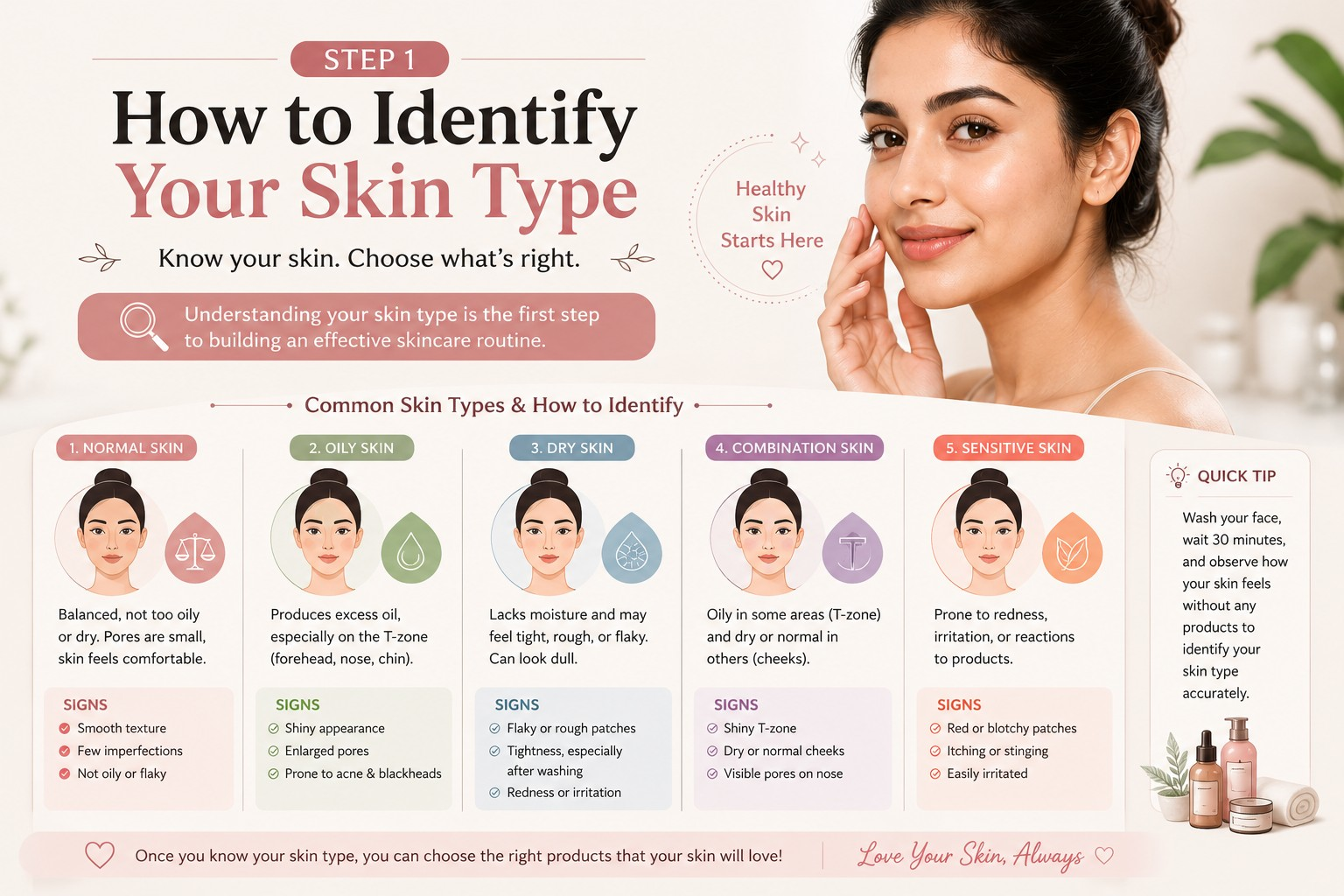
A simple way to check: wash your face with a gentle cleanser, pat dry, and wait 30 minutes without applying anything.
- Oily skin — shine appears across the whole face, especially the forehead, nose and chin
- Dry skin — skin feels tight, may look flaky or dull, with little to no shine
- Combination skin — the T-zone (forehead, nose, chin) gets oily while the cheeks stay dry or normal
- Sensitive skin — skin reacts easily to new products with redness, stinging or itching, regardless of oil level
- Normal skin — balanced, with minimal shine or tightness, and few reactions to new products
Oily Skin: What It Needs
Oily skin produces excess sebum, leading to shine, enlarged-looking pores, and a higher tendency toward acne. It benefits from lightweight, oil-free formulas that control shine without stripping the skin, since over-drying oily skin often triggers it to produce even more oil in response.
Look for gel-based cleansers, oil-free moisturisers, and products labelled “non-comedogenic.” Ingredients like salicylic acid and niacinamide help manage oil production and minimise the appearance of pores.
Dry Skin: What It Needs
Dry skin lacks sufficient natural oils, leading to tightness, flaking, and sometimes fine lines that appear more prominent. It needs richer, more emollient formulas that restore the skin’s moisture barrier rather than lightweight or mattifying products.
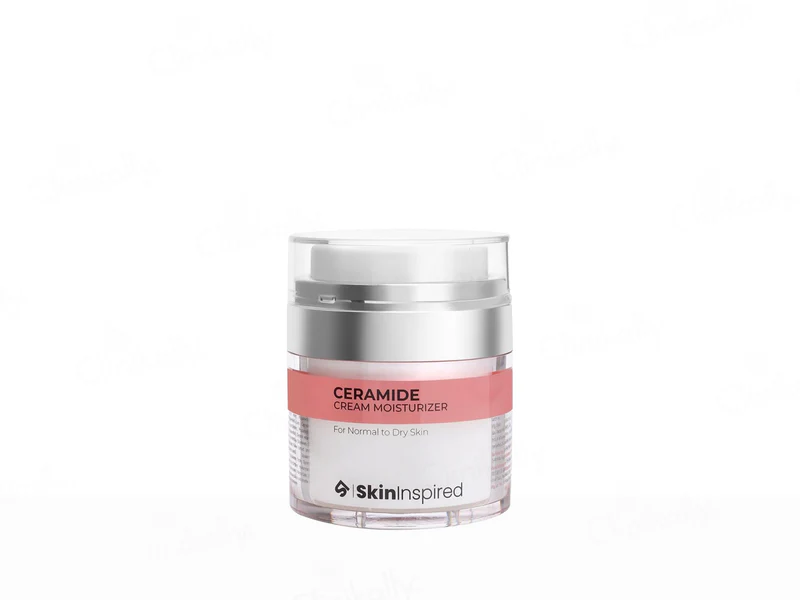
A ceramide-rich moisturiser such as SkinInspired Ceramide Cream Moisturizer is a strong choice, since ceramides directly rebuild the skin’s protective barrier. Cream-based, fragrance-free cleansers and hydrating serums with hyaluronic acid also help dry skin hold onto moisture throughout the day.
Combination Skin: What It Needs
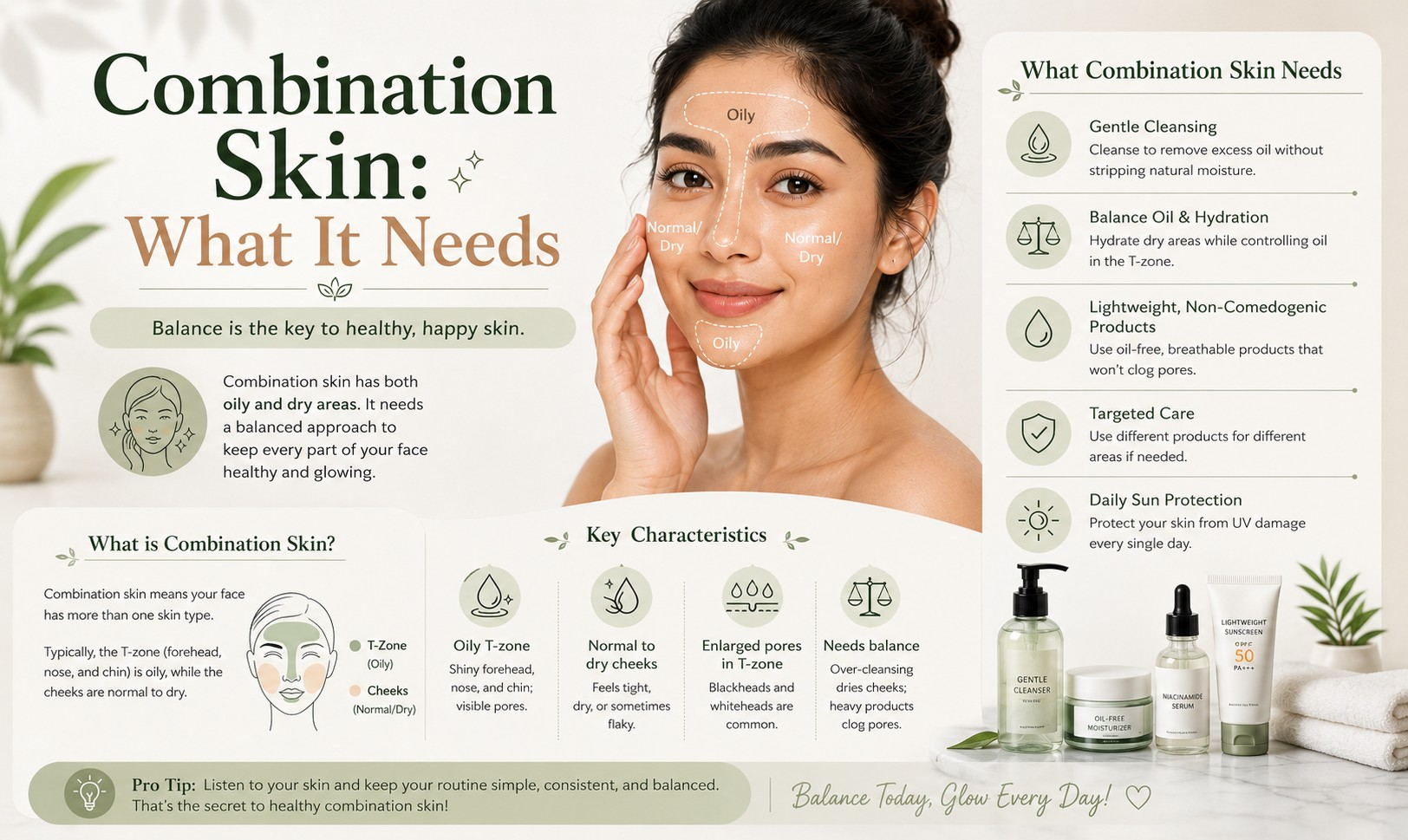
Combination skin is genuinely the trickiest to treat, because the oily and dry zones need somewhat opposite approaches. The most practical solution is a balanced, lightweight moisturiser applied everywhere, with a slightly richer layer added only to the drier cheek areas if needed. Avoid using two entirely different product lines on different parts of the face, which tends to create more irritation than it solves.
Sensitive Skin: What It Needs
Sensitive skin reacts easily to fragrances, alcohol, and certain active ingredients, often with redness, stinging or breakouts. The priority is minimalism — fewer ingredients, no added fragrance, and gradual introduction of any new product one at a time so you can identify what triggers a reaction if one occurs.
Patch-test every new product on the inner forearm for 48 hours before applying it to the face, and avoid layering multiple active ingredients, such as retinoids and exfoliating acids, at the same time.
Normal Skin: What It Needs
Normal skin has the most flexibility, tolerating a wider range of products without irritation. The main task here is maintenance rather than correction — a gentle cleanser, a lightweight moisturiser, and daily sunscreen are usually enough to keep normal skin balanced, with targeted treatments added only for specific concerns like fine lines or occasional breakouts.
Building a Routine Around Your Skin Type
Regardless of skin type, a basic routine follows the same structure:
- Cleanse with a formula suited to your skin type — gel for oily, cream for dry, fragrance-free for sensitive
- Treat with any targeted serum or active ingredient, applied to clean, dry skin
- Moisturise to lock in hydration, adjusting richness to your skin type
- Protect with broad-spectrum sunscreen every morning, regardless of skin type or weather
Ingredients to Match, and Avoid, by Skin Type
| Skin Type | Helpful Ingredients | Ingredients to Approach Carefully |
|---|---|---|
| Oily | Salicylic acid, niacinamide, oil-free formulas | Heavy oils, thick creams |
| Dry | Ceramides, hyaluronic acid, glycerin | Alcohol-based toners, strong exfoliants |
| Combination | Lightweight, balanced moisturisers | Overly rich or overly stripping products used everywhere |
| Sensitive | Fragrance-free, minimal-ingredient formulas | Fragrance, alcohol, strong acids, layered actives |
| Normal | Most standard formulas | Unnecessary over-treatment with too many actives |
Common Mistakes People Make
- Choosing products based on trends rather than your actual skin type
- Skipping moisturiser on oily skin, which can trigger the skin to overproduce oil in response
- Using harsh, stripping cleansers on dry or sensitive skin, worsening the tightness or reactivity
- Layering too many active ingredients at once, regardless of skin type
- Not patch-testing new products, especially with sensitive skin
- Skipping sunscreen because a moisturiser has SPF listed, without checking if the SPF level and coverage are adequate
When to See a Dermatologist
Persistent redness, ongoing breakouts that do not respond to over-the-counter products, or a suspicion that your skin type has changed significantly are all good reasons to see a dermatologist. Skin type can genuinely shift with age, hormonal changes, climate, or underlying health conditions, so a routine that worked for years may eventually need reassessment.
Frequently Asked Questions
1. Can my skin type change over time?
Yes. Skin type can shift with age, hormonal changes, climate, and even stress levels. Many people notice their skin becoming drier with age or oilier during hormonal fluctuations, so it is worth reassessing periodically rather than assuming your skin type is fixed for life.
2. Is combination skin the same as normal skin?
No. Combination skin has distinctly oilier and drier zones on the same face, while normal skin is relatively balanced everywhere with minimal shine or dryness in any area.
3. Do I need different products for morning and night?
Not strictly, though many people use a lighter moisturiser with sunscreen in the morning and a richer, treatment-focused product at night, since sunscreen is only needed during the day.
4. Can oily skin still be dehydrated?
Yes, and this is a common source of confusion. Oily skin refers to sebum production, while dehydration refers to a lack of water in the skin — you can have both at once, which is why oily skin still needs a lightweight, hydrating moisturiser rather than none at all.
5. How do I know if a product is wrong for my skin type?
Watch for increased breakouts, persistent redness, stinging, excessive dryness or a greasy film that does not absorb. Any of these after introducing a new product is a sign to stop and reassess, ideally introducing only one product at a time so you can identify the cause.
6. Is it bad to use the same skincare routine year-round?
Not necessarily, but many people need to adjust richness seasonally — a lighter moisturiser in humid summer months and a richer one in dry winter conditions, even without their underlying skin type changing.
7. What is the most important product regardless of skin type?
Sunscreen. It is the one product that benefits every skin type equally and has the most well-established evidence for preventing long-term skin damage, more than any specific treatment serum.
8. Can sensitive skin use active ingredients like retinol?
Yes, but gradually and at lower concentrations, starting with two or three nights a week rather than daily, and always buffered with a moisturiser to reduce irritation.
9. Should I get my skin type professionally assessed?
It can help, particularly if you have tried multiple routines without success, since a dermatologist can identify underlying conditions like rosacea or eczema that mimic simple sensitivity or dryness and need different treatment.
10. How long should I trial a new skincare routine before judging it?
At least 6 to 8 weeks for most products, since skin cell turnover takes about a month, and it takes time to see whether a routine is genuinely helping or simply not causing obvious problems yet.
Conclusion
The most expensive product in the world will underperform if it is mismatched to your skin type, while a simple, well-matched routine consistently outperforms an expensive one that fights against your skin’s natural tendencies. Take the time to genuinely identify your skin type, introduce products one at a time, and give any new routine a full 6 to 8 weeks before judging it.
Browse skincare matched to every skin type in the Skin Care category at PMC Herbals.
Medical Disclaimer
This article is intended for general educational and informational purposes only. It is not medical advice, and it is not a substitute for consultation, diagnosis or treatment by a qualified healthcare professional.
If you experience persistent skin reactions, ongoing breakouts, or suspect an underlying skin condition rather than simple skin type mismatch, consult a dermatologist for a proper evaluation.
PMC Herbals does not accept liability for decisions made solely on the basis of this content.