










If you have noticed brown patches, dark spots or an uneven skin tone that will not fade no matter how many products you try, you are dealing with hyperpigmentation — one of the most common skin concerns dermatologists see, and also one of the most misunderstood. The good news is that with the right approach, most cases improve significantly, even if it takes patience.
This guide explains what causes hyperpigmentation, the difference between the various types, and which treatments actually have evidence behind them versus which ones just fade the wallet.
- What Is Hyperpigmentation?
- Types of Hyperpigmentation
- What Causes Dark Spots?
- Sun Exposure: The Biggest Trigger
- Treatment Options That Work
- How Long Does Treatment Take?
- Prevention Tips
- Common Mistakes That Make It Worse
- When to See a Dermatologist
- Frequently Asked Questions
- Conclusion
- Medical Disclaimer
What Is Hyperpigmentation?
Hyperpigmentation is a broad term for any patch of skin that has become darker than the skin around it, caused by excess production of melanin, the pigment responsible for skin colour. It is not a single condition but a category that covers several distinct causes, each of which responds differently to treatment.
Types of Hyperpigmentation
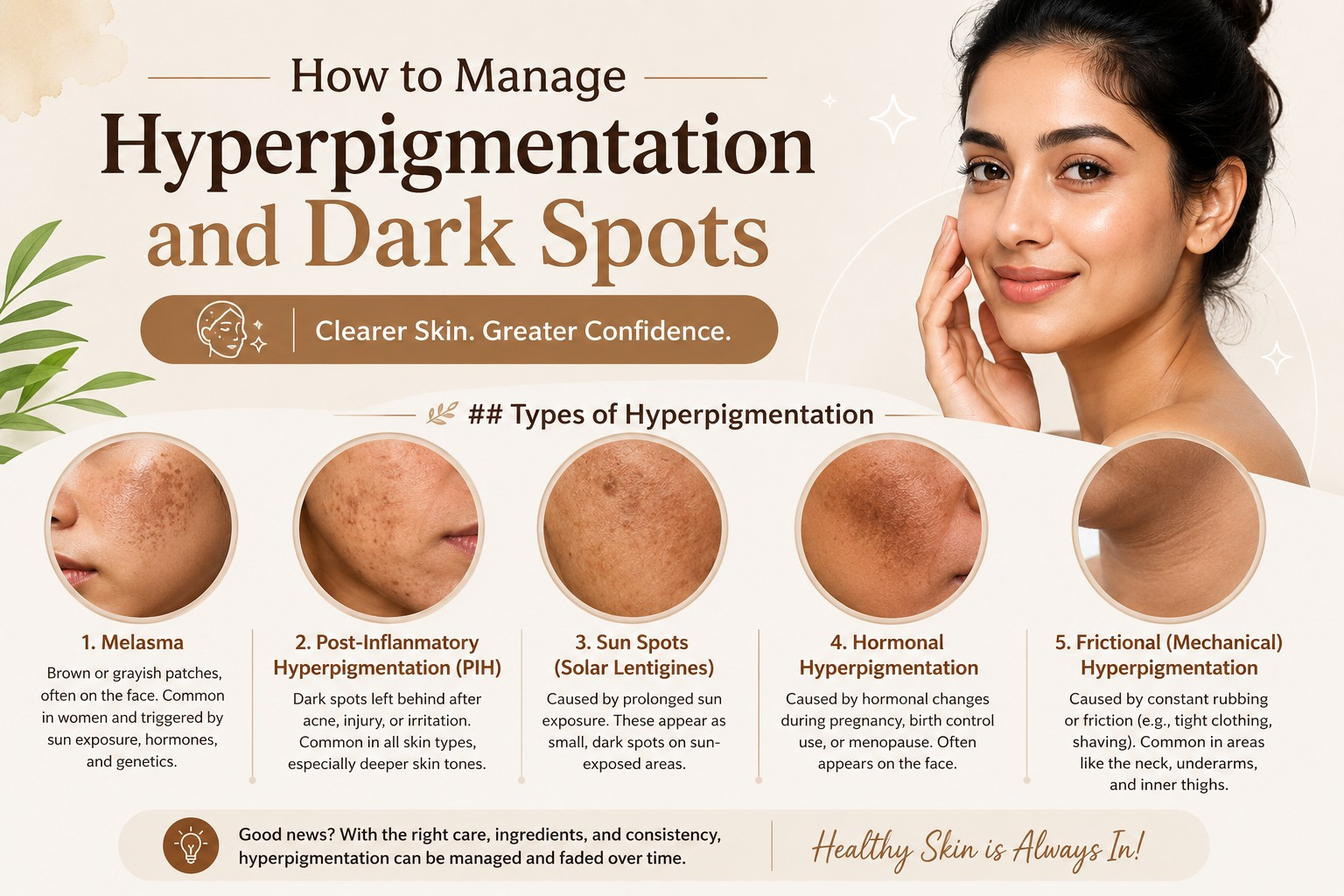
- Melasma — symmetrical brown patches, usually on the cheeks, forehead and upper lip, strongly linked to hormones and sun exposure, and common during pregnancy or with birth control use
- Post-inflammatory hyperpigmentation (PIH) — dark marks left behind after acne, cuts, burns or eczema flares, as the skin overproduces pigment while healing
- Sunspots (solar lentigines) — flat brown spots from cumulative sun exposure over years, most common on the face, hands and shoulders
- Freckles — small, genetically driven spots that darken with sun exposure and lighten without it
Knowing which type you have matters, because melasma and PIH respond differently to treatment, and using the wrong approach can waste months.
What Causes Dark Spots?
- UV exposure, which triggers melanin production as a protective response and is the single biggest driver of nearly all pigmentation types
- Inflammation, from acne, injury or irritation, which leaves pigment behind as skin heals
- Hormonal changes, particularly during pregnancy, with birth control, or with hormone therapy
- Genetics, which influences how reactive your skin is to triggers like sun and inflammation
- Certain medications, including some antibiotics and chemotherapy drugs, which can increase photosensitivity
Sun Exposure: The Biggest Trigger
Nearly every form of hyperpigmentation is made worse by sun exposure, and this is the single most underestimated factor in why treatment fails. UV light stimulates melanin-producing cells directly, and it can undo months of treatment progress in a matter of unprotected days. This is why dermatologists consistently say that sunscreen is not optional — it is the actual foundation of any pigmentation treatment, not an accessory to it.
Treatment Options That Work
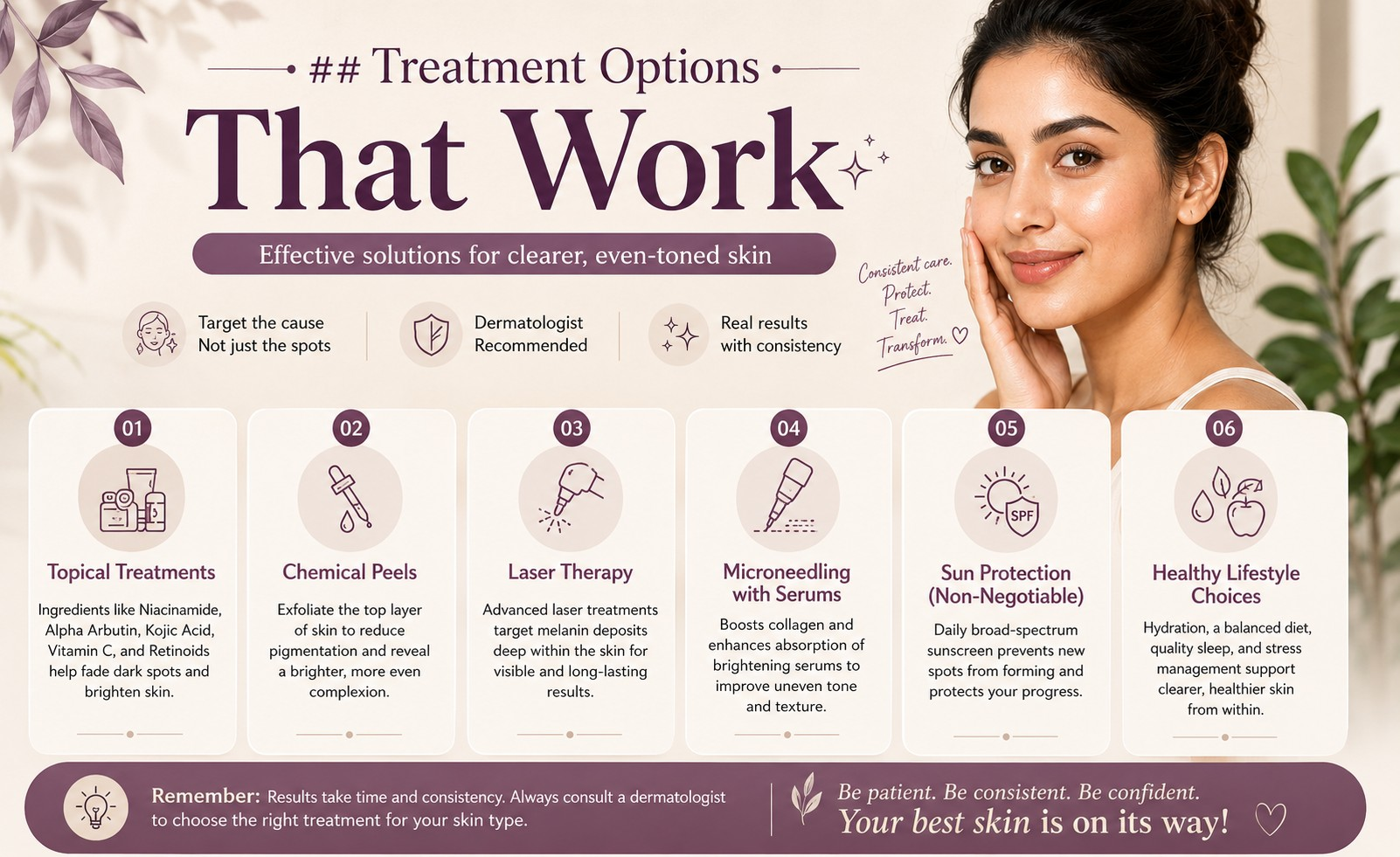
- Hydroquinone, the most studied depigmenting ingredient, available in prescription-strength creams such as Hinder Hydroquinone Cream and IBGlow Ultra Hydroquinone Cream, which works by slowing melanin production
- Combination creams pairing a retinoid, a mild steroid and hydroquinone, such as A Ret HC Cream, which address pigmentation from multiple angles at once
- Azelaic acid, a gentler option suited to sensitive skin, found in products like Aczee 10% Azelaic Serum
- AHA-based lightening gels, such as FCL AHA Lightening Gel HQ, which combine exfoliation with pigment-fading actives
- Depigmenting complexes like Lumacip HQ Depigmenting Complex, often used for stubborn or resistant patches
- Chemical peels and laser treatments, performed in-clinic for deeper or more resistant pigmentation, under professional supervision
How Long Does Treatment Take?
Pigmentation treatment is slow by nature, because it works at the pace of your skin’s natural turnover cycle. Most people see initial fading at 6 to 8 weeks, with more meaningful improvement at 3 to 6 months of consistent use. Melasma in particular can take longer and may partially return with sun exposure or hormonal triggers, requiring ongoing maintenance rather than a one-time fix.
Prevention Tips
- Wear broad-spectrum SPF 30 or higher every single day, rain or shine, indoors or out — UV passes through windows and clouds
- Reapply sunscreen every two hours if you are outdoors for extended periods
- Treat acne and inflammation promptly to reduce the chance of post-inflammatory marks forming in the first place
- Avoid picking at spots or scabs, which significantly increases the risk of dark marks left behind
- Wear a wide-brimmed hat during peak sun hours as an extra layer of physical protection
- Be patient with hormonal pigmentation, since melasma can flare with pregnancy, birth control or hormone therapy regardless of skincare routine
Common Mistakes That Make It Worse
- Skipping sunscreen because you are indoors most of the day — UV from windows still contributes
- Over-exfoliating, which irritates skin and can trigger more post-inflammatory pigmentation, not less
- Stopping treatment as soon as spots start fading, allowing pigment to return before the underlying cause is addressed
- Combining too many active ingredients at once, which increases irritation without speeding up results
- Picking or scratching existing dark spots or breakouts
When to See a Dermatologist
Book an appointment if a dark spot changes shape, colour or size rapidly, has an irregular border, bleeds, or looks different from your other pigmentation — these can be signs of something other than ordinary hyperpigmentation and need proper evaluation. It is also worth seeing a dermatologist if over-the-counter treatment has not shown any improvement after 3 months of consistent use, since a prescription-strength option or in-clinic procedure may be more appropriate.
Frequently Asked Questions
1. What is the fastest way to get rid of dark spots?
There is no truly fast fix — even the most effective treatments take weeks to show visible results, since they work by slowing pigment production and waiting for skin turnover. In-clinic procedures like chemical peels or lasers can speed things up but still require multiple sessions and diligent sun protection.
2. Is hydroquinone safe to use long-term?
No, hydroquinone is typically prescribed for defined periods, often 8 to 12 weeks, followed by a break, since prolonged continuous use is linked to a rare condition called ochronosis. Follow your dermatologist’s specific instructions rather than using it indefinitely.
3. Can hyperpigmentation go away on its own?
Some types, like mild post-inflammatory marks from a single breakout, can fade on their own over several months. Melasma and sun-induced pigmentation generally do not fully resolve without active treatment and consistent sun protection.
4. Does diet affect hyperpigmentation?
Diet plays a minor role compared to sun exposure and skincare, though some evidence suggests antioxidant-rich diets may modestly support skin health. It is not a substitute for sunscreen or targeted treatment.
5. Why do my dark spots keep coming back?
Recurring pigmentation, especially melasma, is often driven by ongoing triggers — sun exposure, hormonal changes, or heat — that outlast a single treatment course. Consistent daily sun protection is the main factor in preventing recurrence.
6. Can I use retinol and hydroquinone together?
Combination products like A Ret HC are specifically formulated to pair a retinoid with hydroquinone safely, but combining separate high-strength products on your own can cause excessive irritation. Follow a dermatologist-guided regimen rather than layering actives independently.
7. Is laser treatment better than creams for dark spots?
Lasers can produce faster, more dramatic results for certain types of pigmentation, particularly sunspots, but they carry a higher cost and a risk of worsening pigmentation in some skin tones if not performed by an experienced practitioner. Creams remain the first-line approach for most people.
8. Does pregnancy-related pigmentation go away after delivery?
Melasma related to pregnancy often fades partially within a year after delivery as hormones normalise, but it may not disappear completely and can flare again with future pregnancies or hormonal contraception.
9. Can makeup make hyperpigmentation worse?
Makeup itself does not usually worsen pigmentation, but skipping sunscreen underneath it, or using comedogenic products that trigger breakouts, can indirectly contribute to new post-inflammatory marks.
10. What ingredient should I start with if I am new to treating dark spots?
Azelaic acid is often a good starting point for sensitive skin, since it is gentler than hydroquinone while still being effective, and it also helps with acne-related redness. From there, a dermatologist can guide you toward stronger options if needed.
Conclusion
Hyperpigmentation is stubborn, but it is not permanent for most people. The combination that actually works is consistent, evidence-based treatment — hydroquinone, azelaic acid or a combination cream, guided by a dermatologist — paired with genuinely diligent daily sun protection. Skip either half of that equation and progress stalls no matter how good the product is.
Browse dermatologist-recommended pigmentation treatments in the Hyperpigmentation category at PMC Herbals. Prescription required for hydroquinone-based treatments.
Medical Disclaimer
This article is intended for general educational and informational purposes only. It is not medical advice, and it is not a substitute for consultation, diagnosis or treatment by a qualified healthcare professional.
Prescription-strength pigmentation treatments, including hydroquinone and combination creams, should only be used under dermatologist guidance. If a dark spot changes rapidly in size, shape or colour, or bleeds, seek medical evaluation promptly, as this can indicate a condition requiring urgent attention.
PMC Herbals does not dispense prescription medicines without a valid prescription and does not accept liability for decisions made solely on the basis of this content.