










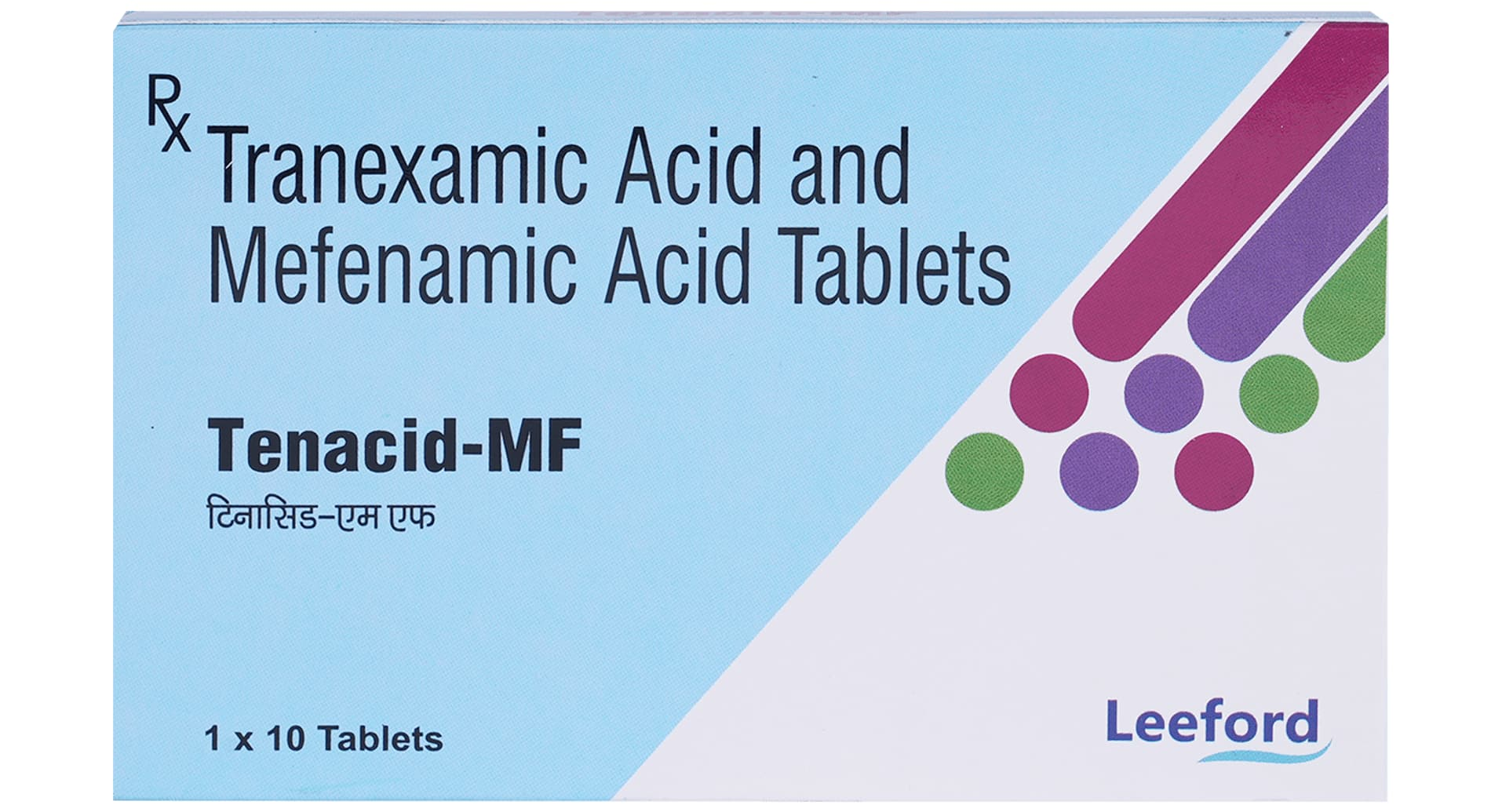
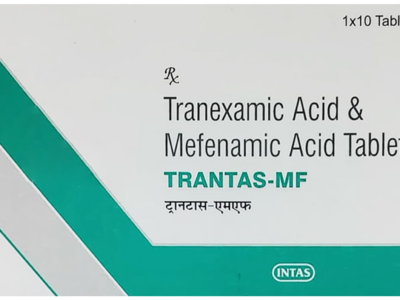
Tenacid-MF Tablet – Tranexamic Acid 500 mg + Mefenamic Acid 250 mg by Leeford
Tenacid-MF from Leeford Healthcare combines Tranexamic Acid IP 500 mg with Mefenamic Acid IP 250 mg in a film-coated tablet, aimed at the two complaints that usually arrive together in a heavy period: the bleeding and the pain. Mefenamic acid is a fenamate NSAID, and its inclusion here is not simply for the cramps. NSAIDs block prostaglandin production, and in the uterus the prostaglandins responsible for painful cramping are also the ones that keep the endometrial vessels dilated and bleeding – so mefenamic acid reduces menstrual blood loss in its own right, by around a fifth to a quarter, on top of relieving the pain. Add tranexamic acid, which stops the clots in the lining from being dissolved prematurely, and the two act on entirely separate mechanisms. Pack of 1 x 10 tablets.
Key Features
- Tranexamic Acid IP 500 mg + Mefenamic Acid IP 250 mg per film-coated tablet
- Treats the bleeding and the cramping pain in one tablet
- Mefenamic acid reduces blood loss as well as pain, through prostaglandin blockade
- Two independent mechanisms, both non-hormonal
- Pack of 1 x 10 tablets from Leeford Healthcare Ltd.
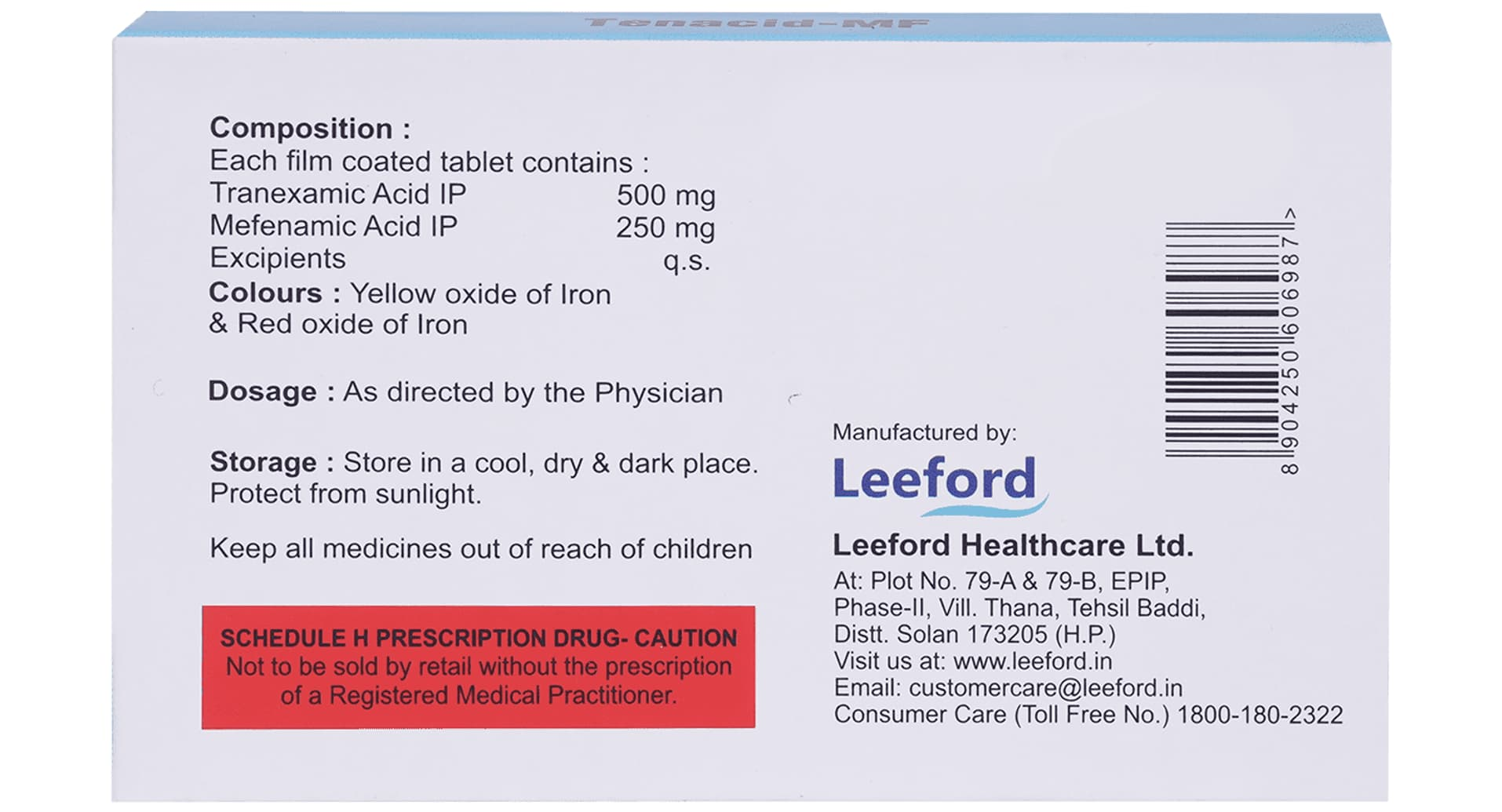
Composition
- Tranexamic Acid IP – 500 mg
- Mefenamic Acid IP – 250 mg
- Colours: Yellow oxide of Iron & Red oxide of Iron. Excipients q.s. As printed on the pack
Uses & Benefits
- Reduces heavy menstrual bleeding and the cramping pain that goes with it
- Two separate mechanisms – antifibrinolytic plus prostaglandin blockade
- Mefenamic acid cuts blood loss in addition to relieving pain
- Non-hormonal, with no effect on the cycle or fertility
- Taken only on the days it is needed
- One tablet instead of a painkiller plus a separate antifibrinolytic
Directions for Use
- Swallow the tablet whole with water
- Take it with or immediately after food – mefenamic acid is an NSAID and is harsh on an empty stomach
- Dosage as directed by the physician, usually only during the heavy, painful days
- Do not take other NSAIDs (ibuprofen, diclofenac, naproxen) alongside it
- Do not continue beyond the prescribed number of days
Precautions
- This contains an NSAID. Avoid it if you have a stomach ulcer, a history of gastrointestinal bleeding, severe kidney or liver disease, uncontrolled heart failure, or asthma triggered by aspirin or NSAIDs
- Tell your doctor at once if you have ever had a blood clot, stroke or heart attack – tranexamic acid slows clot breakdown and is not given where clotting has occurred or is likely
- Do not combine it with combined hormonal contraceptives without specialist advice
- NSAIDs and blood pressure medicines, diuretics, lithium, methotrexate and blood thinners all interact. List everything you take for your doctor
- Stop and seek help for black or tarry stools, vomiting blood, severe stomach pain, a rash, swelling of the face, breathlessness, calf pain or a change in vision
- Heavy bleeding needs a diagnosis – fibroids, polyps, thyroid and clotting disorders still need to be excluded
Storage
- Store in a cool, dry and dark place. Protect from sunlight, as printed on the pack
- Keep the tablets in the blister until use
- Keep all medicines out of reach of children
Disclaimer
Schedule H prescription drug – to be sold by retail on the prescription of a Registered Medical Practitioner only. This information is for general awareness and is not a substitute for professional medical advice, diagnosis or treatment. Heavy or abnormal bleeding always needs a cause to be found; do not treat it with an antifibrinolytic on your own.



Reviews
There are no reviews yet.