










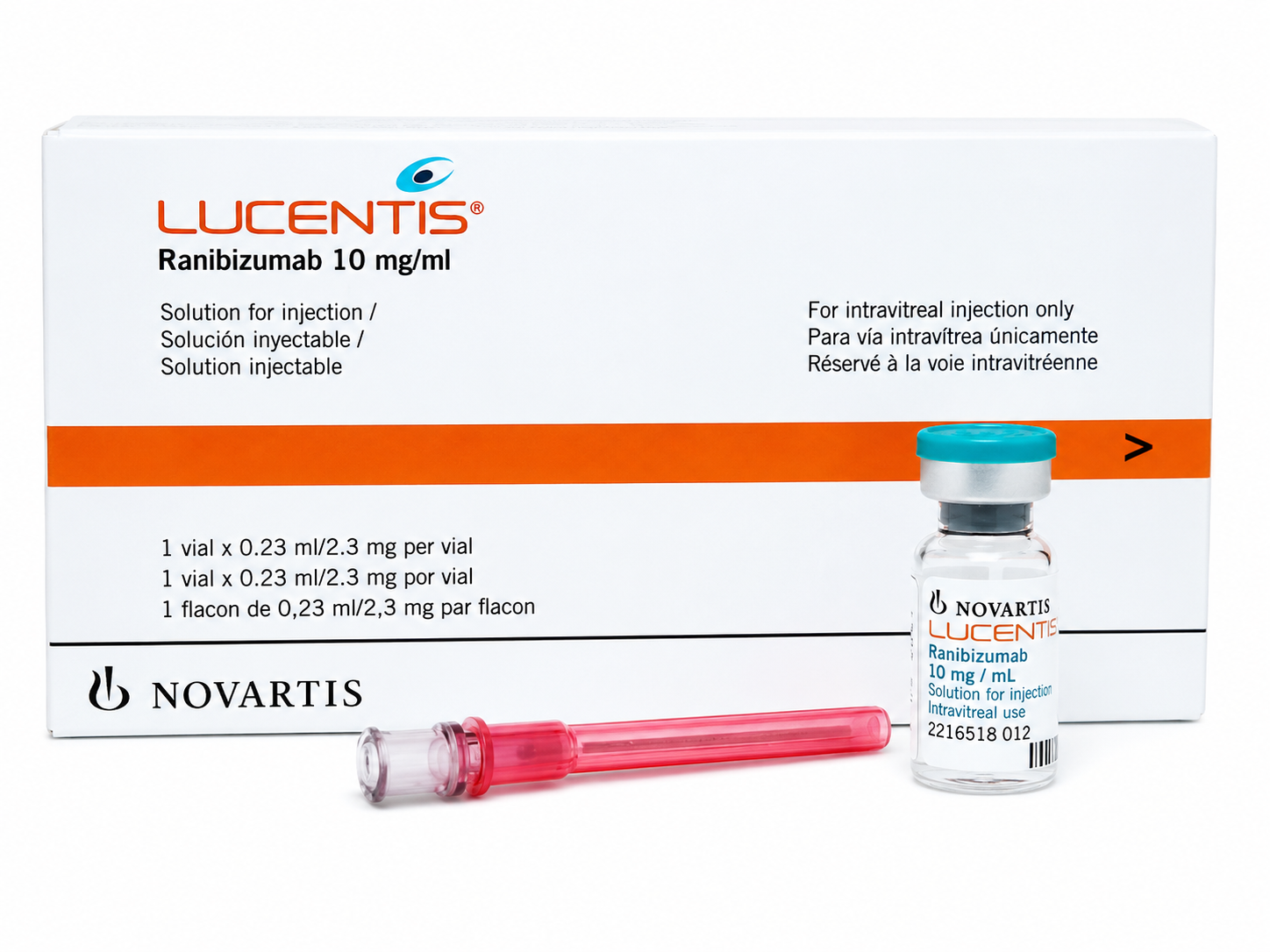
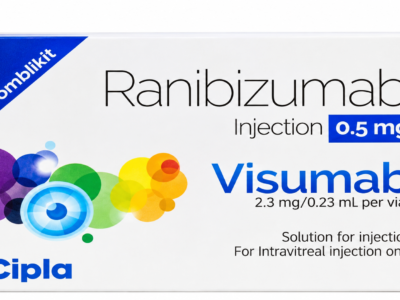
Lucentis Injection – Ranibizumab for Retinal Eye Disorders
Lucentis Injection contains Ranibizumab, a prescription anti-VEGF ophthalmic medicine used to treat selected retinal conditions involving abnormal blood-vessel growth, vascular leakage, or swelling in the retina. Ranibizumab works by blocking vascular endothelial growth factor A, also known as VEGF-A. This protein contributes to the formation and leakage of abnormal blood vessels in the eye. Blocking VEGF-A helps reduce retinal swelling, fluid leakage, and abnormal blood-vessel growth. Lucentis must be administered only by a qualified ophthalmologist experienced in intravitreal injections. The required strength, dose, treatment frequency, and duration depend on the diagnosed eye condition and the ophthalmologist’s treatment plan.
Key Features
- Contains Ranibizumab: An anti-VEGF monoclonal antibody fragment.
- Retinal Eye Treatment: Used for selected conditions involving retinal swelling or abnormal blood vessels.
- Intravitreal Injection: Administered directly into the vitreous cavity of the eye.
- Single-Dose Presentation: Supplied in a single-use vial or prefilled syringe, depending on the market.
- Specialist Administration: Must be prepared and injected by a trained ophthalmologist.
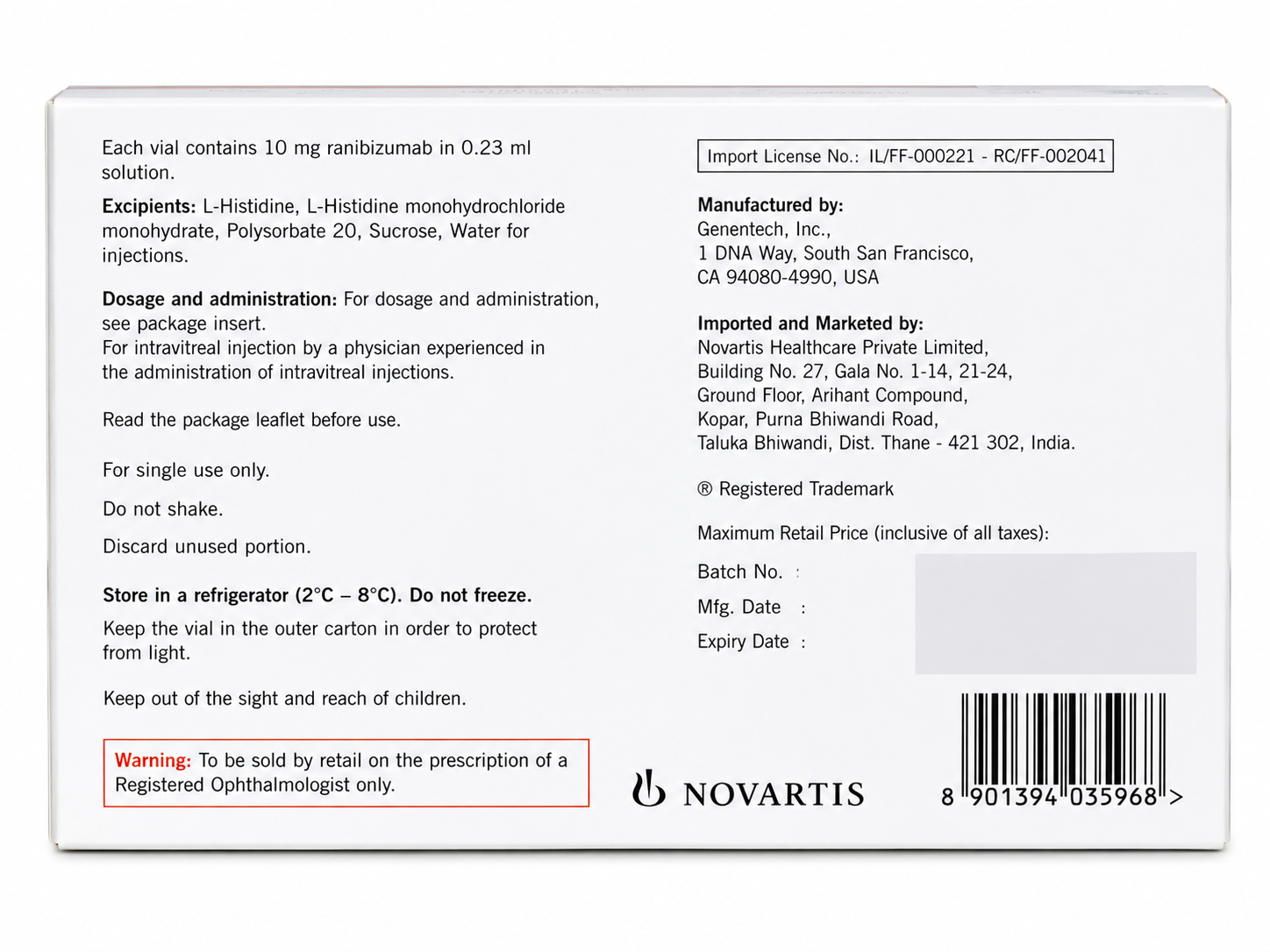
- Cold-Chain Medicine: Requires refrigeration and protection from light.
Active Ingredient
- Ranibizumab: An anti-VEGF medicine that helps reduce abnormal retinal blood-vessel growth, vascular leakage, and swelling.
Uses
- Neovascular or wet age-related macular degeneration.
- Diabetic macular edema.
- Diabetic retinopathy in eligible patients.
- Macular edema following retinal vein occlusion.
- Myopic choroidal neovascularization.
- Other retinal conditions can be specifically diagnosed and treated by an ophthalmologist.
How It Is Administered
- Lucentis must be administered only by a qualified ophthalmologist.
- It is injected directly into the vitreous cavity of the affected eye.
- It must not be self-administered or injected into a vein, muscle, or under the skin.
- The ophthalmologist will determine the correct strength and dose for each treatment.
- Strict sterile and aseptic techniques must be followed during preparation and administration.
- Each vial or prefilled syringe is intended for single-dose and single-eye use only.
- Any unused solution must be discarded according to medical-waste procedures.
Warning
- Serious Eye Infection: Intravitreal injections may cause endophthalmitis, a potentially sight-threatening infection inside the eye.
- Retinal Complications: Retinal tear, retinal detachment, inflammation, bleeding, or traumatic cataract may occur.
- Increased Eye Pressure: Pressure inside the eye may increase following the injection.
- Seek immediate medical attention for increasing eye pain, redness, blurred or reduced vision, increased floaters, or unusual sensitivity to light.
- Anti-VEGF treatment may be associated with a potential risk of arterial blood-clotting events, including stroke or heart attack.
- Seek urgent medical assistance for sudden weakness, facial drooping, difficulty speaking, chest pain, fainting, or breathing difficulty.
Possible Side Effects
- Eye pain, irritation, itching, or discomfort.
- Eye redness or bleeding on the surface of the eye.
- Temporary blurred vision or other visual disturbances.
- Floaters or a foreign-body sensation in the eye.
- Dry eye or increased tearing.
- Increased pressure inside the eye.
- Inflammation within the eye.
- Headache or joint discomfort.
Storage
- Store in a refrigerator between 2°C and 8°C.
- Do not freeze.
- Keep the product in its original carton to protect it from light.
- Do not use after the expiry date printed on the packaging.
- Do not use if the solution appears cloudy, discoloured, or contains visible particles.
- Do not use if the vial, syringe, seal, or packaging is opened, damaged, or tampered with.
- Keep the sealed product refrigerated until required for administration.
- Keep out of reach of children and unauthorized individuals.
Legal Disclaimer: Lucentis Injection is a prescription ophthalmic biological medicine intended exclusively for intravitreal administration by a qualified ophthalmologist. It may cause serious eye-related or systemic adverse reactions. Available strengths, presentations, and approved indications may differ by country. This information is provided for educational purposes only and should not replace professional medical advice, diagnosis, treatment, or the official instructions supplied with the medicine.

Reviews
There are no reviews yet.